Fishing Charters: Request vs Instant Booking
Discover the best booking method for fishing charters: request-to-book or instant booking.
Fishing Charters, Online Booking, Request-to-Book vs Instant Booking Fishing Charter
Request-to-Book vs. Instant Charter Booking for Fishing Charters: Which Is Right for You?
As fishing charters surge in popularity in 2026, captains and customers are running into the same question: request-to-book vs instant booking fishing charter, which model delivers the best experience? With global charter demand climbing and lead times shrinking, the way you confirm a trip now matters almost as much as where you drop lines in the water.
The Big Picture: Why Booking Style Matters in 2026
The fishing charter market is growing steadily, with global value projected in the multi‑billion‑dollar range and participation in saltwater fishing hitting record highs. At the same time, travelers are booking later: in the wider charter sector, average lead times have dropped from about 118 days to 83 days in just a year, and last‑minute bookings (3–21 days out) have nearly doubled. Customers expect mobile‑first experiences, transparent pricing, and more than ever, instant confirmations and digital convenience.
Against this backdrop, choosing between a request-to-book system and instant charter booking is a strategic decision. It shapes how much control you keep, how high your conversion rates climb, how well you manage crew availability, how you adapt to weather, and how efficiently you handle fleet scheduling.
What Is Request-to-Book for Fishing Charters?
In a request-to-book model, guests submit a booking request for a specific date, time, and trip type. The charter operator then reviews the request, checking crew, boat, and conditions, before manually accepting or declining. Only after approval is the trip confirmed and payment finalized.
Ideal for highly customized or complex trips (multi‑boat groups, specialty species, tournament days).
Works well when local regulations, tides, or seasonal closures require case‑by‑case review.
This approach mirrors how many captains have traditionally operated, phone calls, text messages, and back‑and‑forth emails, just wrapped in an online form instead of a notepad and calendar.
What Is Instant Charter Booking?
With instant charter booking, the guest selects a date and trip on your calendar, enters their details, pays online, and receives immediate confirmation. There’s no waiting for approval; the system trusts your live availability to be accurate and up‑to‑date.
Perfect for standard offerings, half‑day inshore, full‑day offshore, or repeatable packages with clear inclusions.
Aligns with broader travel trends, where hotels, tours, and experiences are increasingly bookable in just a few taps.
Industry research shows that instant booking is gaining ground across travel, including fishing charters, as technology improves and guests grow used to real‑time confirmations (TravelIndustryFuture, 2026).
1. Control: How Much Say Do You Keep Over Each Trip?
For many captains, control is the number‑one reason to stick with request-to-book. When guests submit a request, you can assess:
Whether the requested date matches the target species, tides, and regulations.
The group’s experience level and expectations (kids, first‑timers, hardcore anglers).
Any special needs, mobility issues, language preferences, or custom pickup locations.
This level of control helps you avoid mismatched expectations and protects your reputation on review sites. You can decline unrealistic requests (like a mid‑day summer tuna run in shallow water) or suggest a better time or trip type before confirming.
Instant booking, by contrast, shifts some control to the guest. They choose from the options you’ve pre‑configured. The trick is that you still have control, just earlier in the process. You design your trips, set blackout dates, and define how many seats or boats are available. Once that framework is in place, the system handles the rest automatically.
💡 Pro Tip: Many operators blend both models. Standard trips are instant book, while high‑value custom charters remain request-to-book for maximum control.
2. Conversion: Turning Browsers into Booked Guests
In a market where platforms like Tripadvisor report fishing charter bookings up more than 40% year over year, conversion rate, the percentage of visitors who actually book, can make or break your season. Here, instant booking usually wins.
Guests browsing on their phone late at night want to lock in a trip now, not wait hours for a response.
Shorter lead times mean more last‑minute shoppers who will simply move on to the next captain if they can’t book instantly.
Every extra step in a request-to-book flow, waiting for approval, clarifying pricing, sending payment links,—creates friction. Some guests drop off, especially first‑timers who are nervous about wiring money or handing over card details outside a secure system. Instant charter booking reduces that friction and can significantly boost conversion, particularly for popular inshore or nearshore trips in the $400–$1,200 range where guests are comparing multiple boats side‑by‑side (Chartrr, 2026).
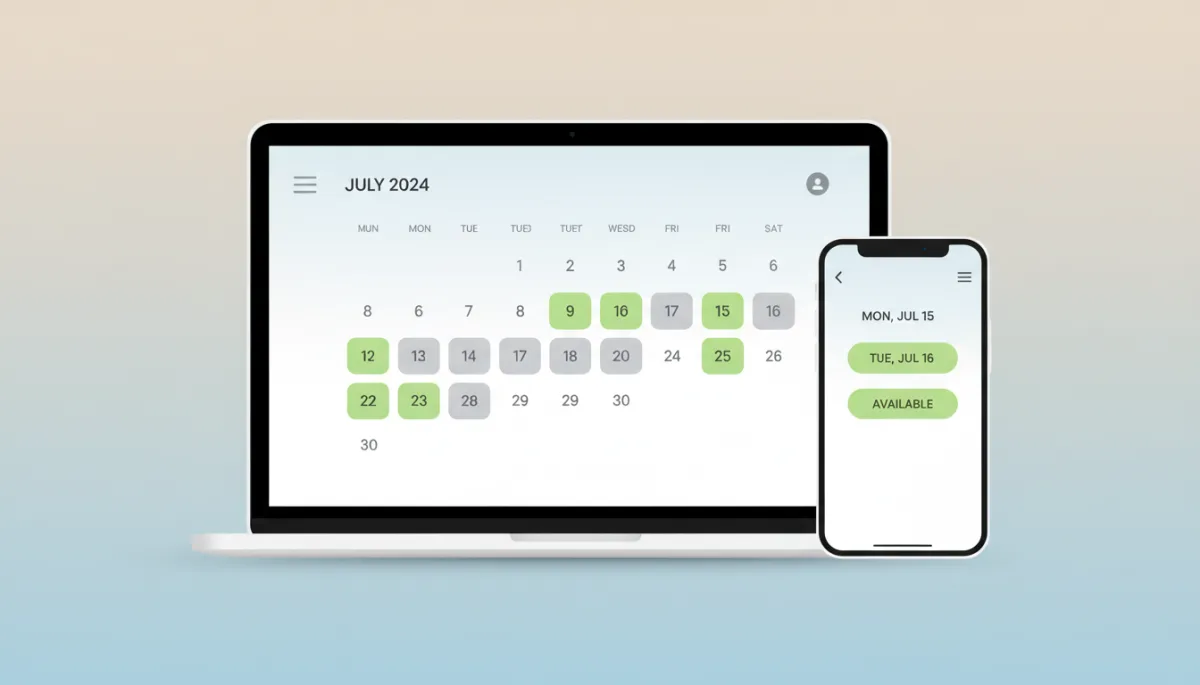
Clean, instant-book calendars reduce friction and lift conversion for fishing charters.
3. Crew Availability: Protecting Your People and Their Time
Behind every successful charter is a captain and crew whose schedules can be surprisingly complex. Many operations juggle:
Part‑time deckhands with other jobs or seasonal commitments.
Different crews for inshore vs. offshore or fly‑fishing vs. trolling trips.
Rotating days off to avoid burnout during peak season.
Request-to-book can feel safer because you double‑check crew availability before approving each trip. If a deckhand calls out, you can decline or suggest another date. However, this manual review becomes harder to sustain as your business grows or as you add more boats.
Instant booking relies on accurate, shared calendars. When you connect your booking system to crew schedules, blocking off days they’re unavailable, you get the best of both worlds: guests book instantly, and you avoid double‑booking your people. As AI‑assisted scheduling tools become more common in fishing charters, this automation is getting easier and more reliable (360iResearch, 2026).
💡 Pro Tip: Use request-to-book only where crew arrangements are highly variable. For everything else, keep live calendars synced and allow instant bookings.
4. Weather: Balancing Safety, Flexibility, and Guest Expectations
Weather is the wild card for every captain. Swells, wind, and storms can flip a dream offshore trip into a safety risk overnight. Many operators worry that instant charter booking leaves them exposed when forecasts change quickly.
In reality, both request-to-book and instant booking require clear weather policies. The difference is how you communicate them:
With request-to-book, you can discuss conditions before confirming, especially for borderline days or nervous guests.
With instant booking, you bake your policy into the booking flow, explaining when you’ll cancel, reschedule, or switch to an inshore alternative.
Modern charter platforms increasingly integrate marine forecasts and alerts, helping captains make better calls earlier. If a three‑day blow is incoming, you can preemptively block those dates on your instant‑book calendar or use automated messages to suggest rescheduling. The key is to combine technology with transparent, guest‑friendly terms, so no one feels surprised when Mother Nature has the final say.
5. Fleet Scheduling: Multi‑Boat Operations and Growth
If you run more than one boat, or plan to, the choice between request-to-book vs instant booking fishing charter models has big implications for fleet scheduling. Manually approving every trip across three or four vessels quickly becomes a full‑time job, especially as demand grows and last‑minute bookings rise.
Instant booking shines here. A well‑designed system can:
Automatically assign trips to specific boats based on capacity, location, or trip type.
Prevent double‑booking a boat or captain across overlapping time slots.
Offer guests alternative times or boats when their first choice is unavailable.
Request-to-book can still work for fleets, but it tends to rely on one highly organized dispatcher or owner. As your operation scales and you add more Fishing Charters or expand into new ports, instant charter booking with smart fleet scheduling tools becomes a powerful way to grow without adding endless admin hours.
Finding the Right Mix: A Hybrid Strategy for Modern Fishing Charters
For most operators in 2026, the best answer isn’t choosing one model forever, it’s designing a hybrid booking strategy that reflects how guests actually behave and what your business needs. Here’s a practical framework:
Make core trips instant book. Half‑day inshore, standard full‑day, and popular shared trips should be instantly bookable with clear pricing and inclusions. This maximizes conversion and captures those last‑minute, mobile‑first guests who just want to get out on the water.
Keep complex or premium trips as request-to-book. Tournament days, multi‑boat corporate events, specialty fly‑fishing, or overnight offshore runs often benefit from a quick consultation before committing. Use request-to-book here to maintain control and ensure every detail is right.
Automate what you can. Sync crew calendars, integrate weather alerts, and use digital waivers and reminders. The more your system handles automatically, the more time you have to focus on safety, service, and putting guests on fish.
Communicate clearly. Whether it’s request-to-book or instant booking, spell out your policies for deposits, cancellations, weather, and what’s included. Clarity builds trust, and repeat business in a market where 99% of anglers say they plan to fish again.
Final Cast: Which Booking Model Should You Choose?
If you value maximum control over each trip, run highly customized experiences, or operate in a region with complex regulations, a strong request-to-book flow will serve you well. It lets you vet every request, align expectations, and adapt to crew availability and weather before money changes hands.
If your priority is higher conversion, smoother fleet scheduling, and less admin, leaning into instant charter booking is the smarter play, especially for your bread‑and‑butter trips. As booking windows shorten and guests grow more comfortable with online payments, the ability to secure a spot in seconds will increasingly separate busy boats from those left at the dock.
For most Fishing Charters, the winning move in 2026 is clear: combine the strengths of both models. Offer instant booking where it boosts conversion and keeps your calendar full, and reserve request-to-book for the trips that truly demand a captain’s personal touch. Done well, your booking system becomes more than a form, it becomes a competitive advantage that keeps rods bent, crews happy, and guests coming back season after season.