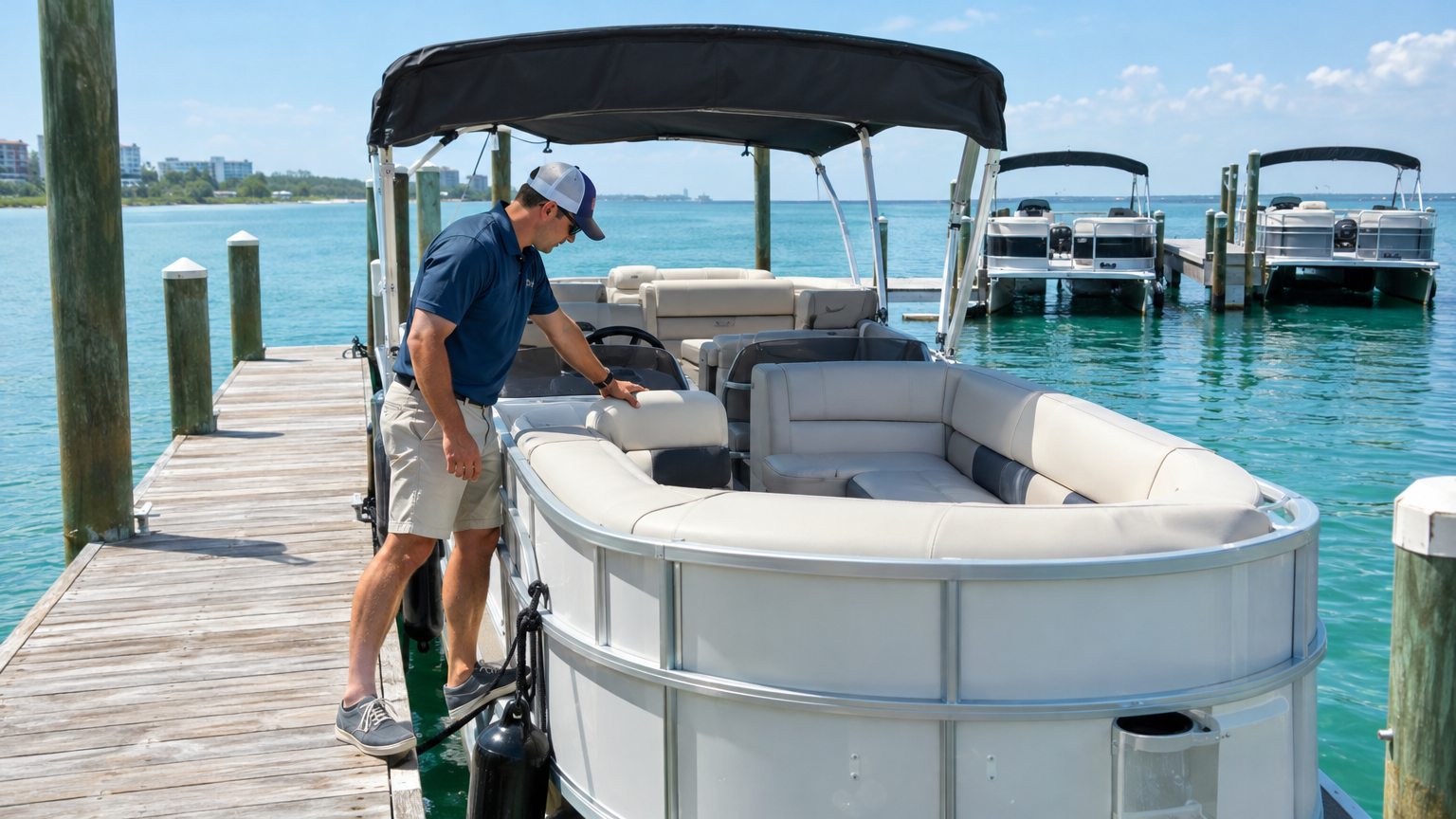
How to Increase Revenue Per Booking with Checkout Add-Ons
Every booking that goes out the door without an add-on is revenue you already earned and then left behind. Here is how marine operators can build checkout upsells that guests actually buy.

You booked the pontoon. You booked the jet ski slot. You sold the offshore trip. Every one of those is a win — but for most marine operators, the booking price and the actual value of the customer who just handed over a credit card are two different numbers, and the gap between them is real money that never made it into your Stripe account.
Checkout add-ons are the straightforward fix. When a guest is already committing to a trip or a rental, they are in a buying mindset. Adding a tube tow, a cooler package, a fishing rod upgrade, or a guided instruction session at that exact moment costs you almost nothing in overhead and often converts at a rate that surprises operators who try it for the first time.
This is not about squeezing guests. It is about making it easy for them to get everything they want without having to ask at the dock — which is where the real friction lives.
Why Dock Upsells Fall Flat
The classic way to sell extras is to mention them when the group arrives. The captain asks if anyone wants to add a rod holder or a tackle upgrade. The dock staff asks if they remembered sunscreen or need a cooler. The problem is that guests are distracted, excited, and in motion. They are looking at the water, not mentally reviewing their budget. The moment they are gearing up to board is the worst possible moment to introduce a purchasing decision.
There is also an awkward power dynamic at the dock. Saying no to a sales pitch feels rude when someone is standing right in front of you. That discomfort does not produce real revenue — it produces reluctant passes and occasional guilt purchases that leave guests feeling like they were squeezed on the way to the water.
Online checkout is different. Guests are relaxed, at home or on their phone, and already in the transaction. They just said yes to the main booking. The cognitive cost of saying yes to one more thing is low, and there is no social pressure in either direction. That is the moment your add-on menu has a real chance.
What Actually Sells as a Checkout Add-On
Not every extra belongs in the booking flow. The ones that convert best share a few traits: they are genuinely useful, they are priced at an amount that feels like a reasonable addition to the total (not a second major purchase), and they solve a problem the guest already knows they have.
Here is what tends to work across VrixPlay's marine verticals:
Watersports Rentals
- Tube tow add-on. Guests renting a jet ski or pontoon often realize mid-trip that they wish they had it. Offer it at checkout before they leave the house.
- Cooler and ice package. A pre-packed cooler waiting at pickup is a genuine convenience that families and groups buy readily.
- Wetsuit or rash guard rental. Seasonal in some markets, but strong when the water is cooler and guests are from out of town without gear.
- Beginner instruction session. For kayak and paddleboard rentals, a 15-minute orientation add-on reduces liability concerns and gives first-timers confidence. It also gives your staff a natural opportunity to check competency before guests go out alone.
- Extended time block. Offer a half-hour extension at checkout for a fixed price. Many guests wish they had more time and will pay for it in advance when the option is visible.
Fishing Charters
- Premium tackle or rod upgrade. Higher-end gear for guests who want a real shot at a specific species. Works especially well for offshore and multi-day trips.
- Fish cleaning and filleting. One of the most popular charter add-ons because it saves guests real hassle after the trip. If you offer this service, it belongs in checkout where guests can commit before they are cold and tired at the dock.
- Bait upgrade. Live bait versus frozen is a meaningful upgrade for experienced anglers. Price it accordingly and describe the difference clearly.
- Trip photos package. If a crew member or mate takes quality photos, offer a photo add-on at checkout. Families especially will pay for a polished set of trip photos delivered the same day.
Boat Rentals
- Fuel package. A prepaid fuel option eliminates dock-time friction and reduces the awkward refueling conversation at return. Guests often prefer knowing that cost is settled.
- Bluetooth speaker or dry bag rental. Low-cost, high-margin extras that convert well for recreational groups.
- Delivery to alternate launch point. If you can trailer to a second ramp, this is a premium add-on that commands real margin and differentiates your operation.
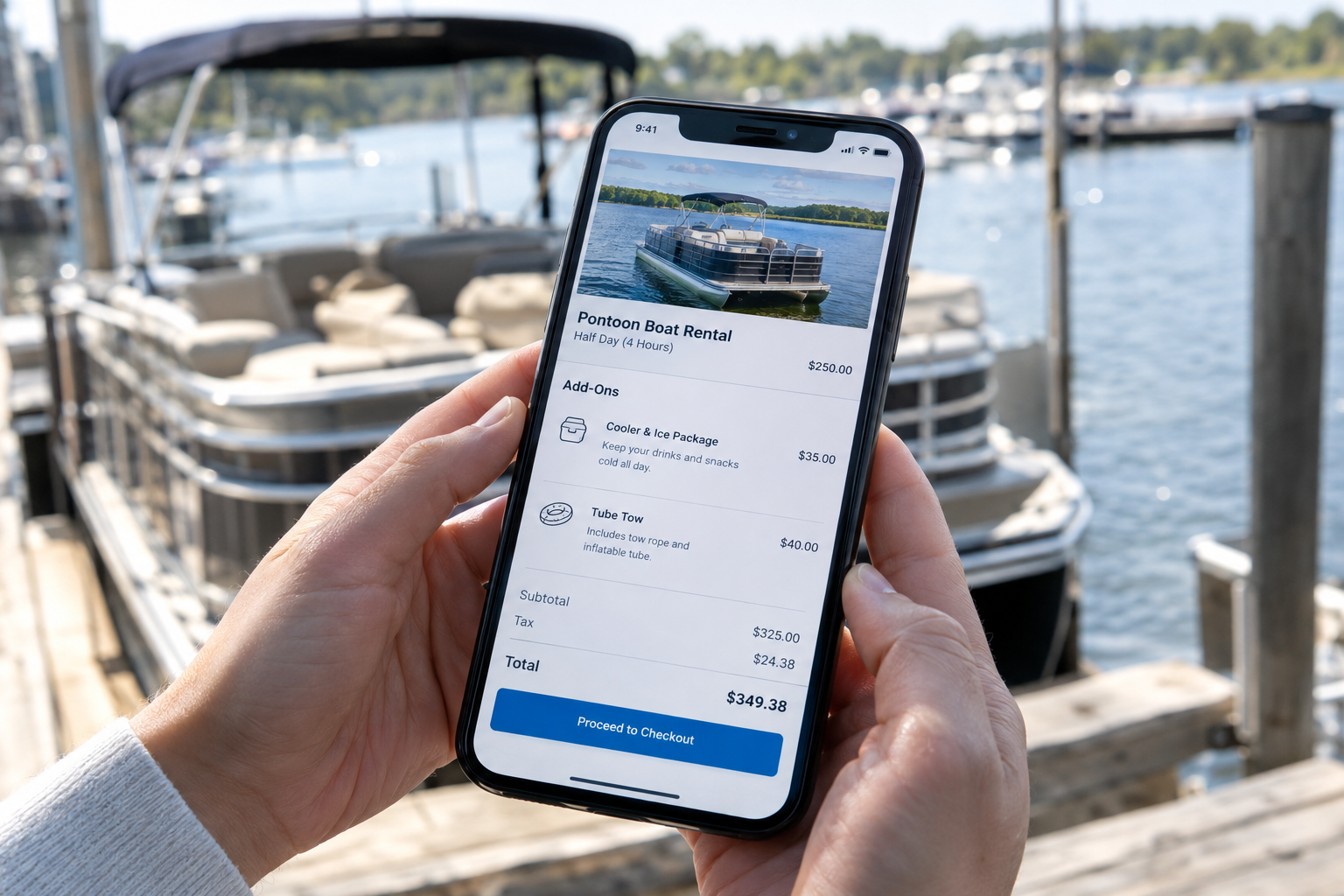
How to Build Add-Ons That Guests Actually Use
The menu matters, but so does how you present it. A long list of vague line items does not convert. A short list of specific, clearly described options does.
Name the benefit, not just the item. "Cooler & Ice" is fine. "Pre-Packed Cooler with Ice — Ready at Pickup" is better. The second version tells the guest what they are actually getting and eliminates the mental work of figuring out if it is worth it.
Limit the choices. Three to five add-ons per trip type is roughly the right range. More than that and guests start ignoring all of them. Pick your highest-converting options and build the list from there. You can always test and rotate.
Price add-ons as a natural percentage of the booking total. A $20 tube tow on a $300 rental conversion is an easy yes. A $75 premium tackle package on a $150 shared trip seat is a harder sell. Keep the add-on price in proportion to the base booking and you will see fewer skips.
Put the most popular add-on first. Guests scan checkout screens quickly. Whatever your strongest seller is belongs at the top of the list with a short description. If your cooler package converts better than anything else, it should be the first item a guest sees after selecting their trip.
Do not require add-ons to unlock the booking. Forced upsells frustrate guests and generate complaints. Every add-on should be optional and easy to skip. The ones that are genuinely good and clearly priced will sell themselves.
Setting Up Add-Ons So They Work Operationally
An add-on that sells well but creates chaos at the dock is not a win. Before you add something to the checkout menu, think through the operational chain.
Your morning view of the day's bookings should show which trips have which add-ons attached. If three jet ski rentals booked the cooler package and two booked the tube tow, your dock crew needs to see that before the guests arrive — not after. A system that surfaces add-on line items by booking and by departure time lets your team prepare without any extra communication.
For add-ons that require physical prep (pre-packed coolers, gear staged by the launch, fish cleaning scheduled after the trip), build a simple prep checklist by departure time. Most operators who struggle with add-on fulfillment are not struggling because the add-on was a bad idea. They are struggling because the information lives in the booking record and nobody looked at it before the morning started.
Refund policy for add-ons also needs to be explicit. If a guest cancels a tube tow 48 hours before the trip, are they getting a refund? What about same-day cancellations? Write it down, put it in the booking confirmation, and make sure your system can process the partial refund cleanly if it comes up.
Measuring Whether Add-Ons Are Working
Once you have add-ons live, the number to track is average revenue per booking, not just total bookings. If your base pontoon rental is $350 and add-ons are bringing the average transaction to $390, that extra $40 per booking adds up fast across a busy season.
Also watch conversion rate by add-on. If your fuel package sells on 60% of rentals but your bluetooth speaker rental sells on 4%, that is useful signal. Either the speaker pricing is off, the description is weak, or it genuinely is not something your guest demographic wants. Pull the low-performer, test a replacement, and see what moves the needle.
Some operators do a simple end-of-month review: total add-on revenue divided by total bookings. Running that number monthly shows whether your menu is getting tighter or drifting. Most see a noticeable improvement in the first 90 days just from reorganizing the order items appear in checkout and improving the descriptions.
How VrixPlay Handles Add-Ons
VrixPlay's booking flow supports packages and add-ons as part of the guest checkout process, so guests can select extras at the same time they book and pay their deposit. Those selections attach to the booking record, which means your dashboard shows add-ons at the booking level, not in a separate system or a handwritten note.
Because payments run directly through Stripe into your own account, add-on revenue lands alongside the base booking — no separate accounting layer, no platform-held wallet to reconcile. Refunds on add-ons process through the same flow as the main booking if you need to issue one.
The platform is free to use with a flat 3% per booking, so adding higher-ticket add-ons raises your absolute fee slightly but keeps the cost structure simple and predictable. There are no extra fees for using the add-on feature.
If you are running a boat rental operation or a watersports stand and you want to see how the add-on flow fits into a live setup, start free at VrixPlay — no credit card required, and setup typically takes about 15 minutes before you are taking real bookings.
The Short Version
Your best chance to sell an add-on is during checkout, not at the dock. Build a short, clearly priced menu of extras that solve real guest problems. Keep the operational chain clean so your team knows what to prep before guests arrive. Track average revenue per booking monthly and prune the list based on what actually converts. The operators who do this consistently end up with meaningfully higher revenue per trip without adding a single extra booking to their calendar.
That is a good use of an afternoon.