From Inquiry to Held Date: How to Convert a Yacht Charter Lead Without the Email Chain
High-ticket yacht charter bookings get lost in email threads. Here is how to move an inquiry to a confirmed, deposit-paid charter fast — and collect guest manifests and waivers before anyone shows up at the slip.

A $4,000 sunset charter for a corporate group of 18 should not live in a reply-all email thread. But for a lot of crewed yacht and catamaran operators, that is exactly where it ends up — buried in DMs, held on a handshake promise, and confirmed with a bank transfer that takes three days to clear.
The inquiry gets in. The back-and-forth starts. Someone asks for pricing. You send a PDF. They forward it to the decision-maker. Three days later, you get a "we're still interested" and you're wondering whether to hold the date or open it back up.
Sound familiar? It is the default booking process for most high-ticket charter operations — not because it works, but because nobody set up anything better.
Here is what a cleaner process looks like, from the first inquiry through the morning the guests step aboard.
The inquiry is not the booking
This sounds obvious, but it is worth saying out loud: when someone inquires about a charter, they have not booked anything. The date is still open, your calendar still shows it available, and anyone else who contacts you in the next 48 hours can take it.
The faster you can move an inquiry to a held date — with a deposit attached to it — the fewer charters you lose to follow-up lag.
For most operators, that gap between "we're interested" and "the date is locked" is where revenue disappears. Someone gets busy, finds another option, or simply decides the friction of your process isn't worth it. High-ticket buyers are not patient shoppers. They want to book something that feels easy and premium, not something that requires six emails and a phone tag cycle.
Your job is to compress that window.
What a clean inquiry-to-held-date flow looks like
The best yacht charter booking flows share a few things in common. They qualify the inquiry fast, they present pricing clearly, and they give the prospective guest a direct path to pay a deposit and lock the date — without waiting for you to be available.
Here is what that looks like in practice:
1. The inquiry comes in through a booking page, not a contact form
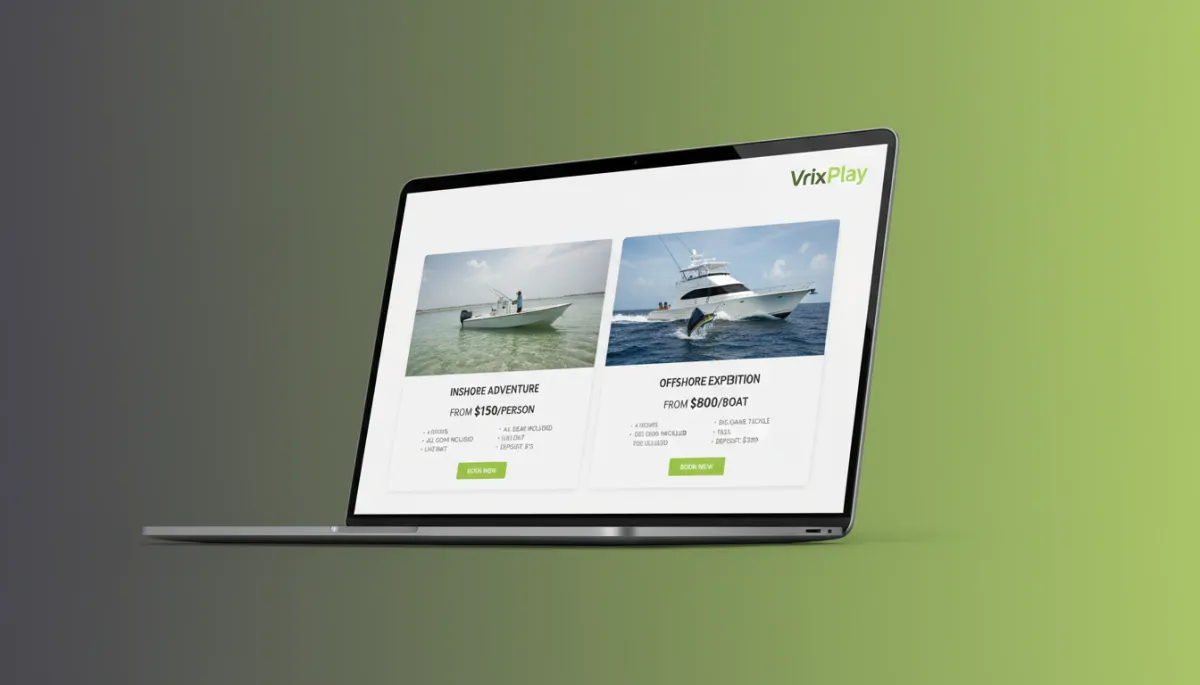
A contact form just collects a name and a message. A booking page collects the date, the group size, the charter type, and — crucially — signals to the guest that they are starting a booking process, not just sending a question into a void.
When a prospect lands on your booking page and sees real availability for the date they want, they are already mentally closer to committing. When they land on a generic contact form, they are still browsing.
2. The request comes to you as a structured inquiry you can review and price
Not every charter is a flat-rate product. A crewed day charter for 12 guests is different from a private event with catering and a custom itinerary. Your booking flow should let guests describe what they want, and let you review and confirm the price before the deposit is collected.
This is a request-to-book model — the guest sends the request, you confirm the pricing, and then they pay the deposit to hold the date. It works well for high-ticket, variable-rate charters because it keeps you in control of the quote while still giving the guest a structured process to follow.
3. A deposit locks the vessel the moment it is paid
Once you confirm pricing and the guest is ready to proceed, the next step is a deposit — not a promise, not a "we'll send you an invoice next week." A deposit paid through a real checkout, directly into your Stripe account, is what actually holds the date.
This matters for two reasons. First, it protects you from holding a vessel off the calendar for a guest who ghosts after "sounds great." Second, it signals commitment from the guest's side. People who pay a deposit to hold a $3,500 charter show up differently than people who made a verbal agreement.
The deposit amount is up to you — some operators take 25%, others 50%, some take it all upfront for high-demand dates. The point is that the deposit is collected digitally and immediately, not chased via bank transfer three days later.
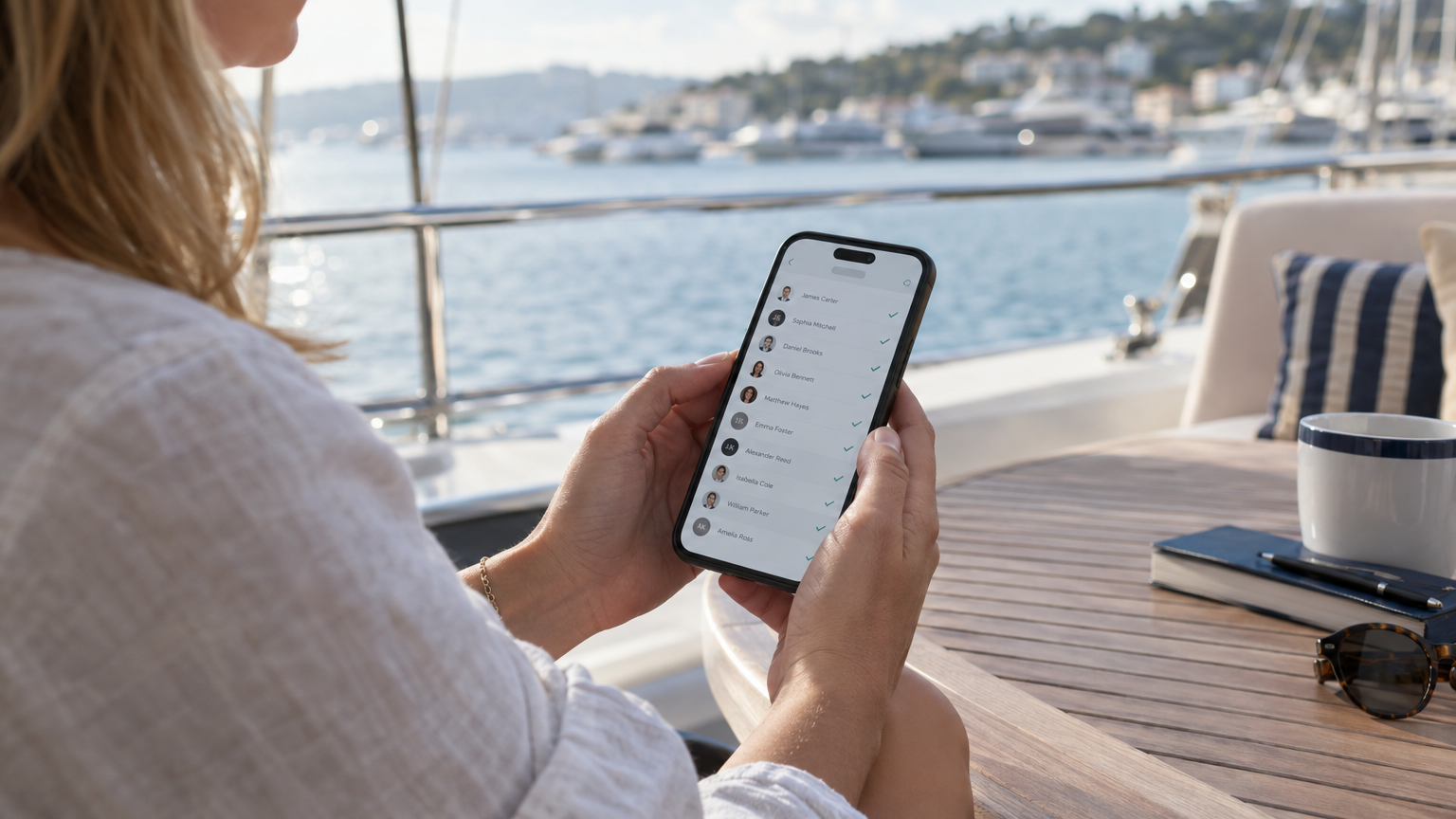
Collecting guest details and waivers before boarding day eliminates the dock-side scramble that slows every departure.
Guest manifests before boarding day — not at the slip
Once the deposit is in and the charter is confirmed, the pre-departure prep begins. And this is where a lot of operations stumble, not because they do not know what they need, but because they collect it too late.
Guest names, contact details, signed waivers, dietary restrictions, the headcount that keeps changing right up until Saturday — these are things you need before the morning of the charter, not when the guests are standing at the slip with champagne warming on the dock.
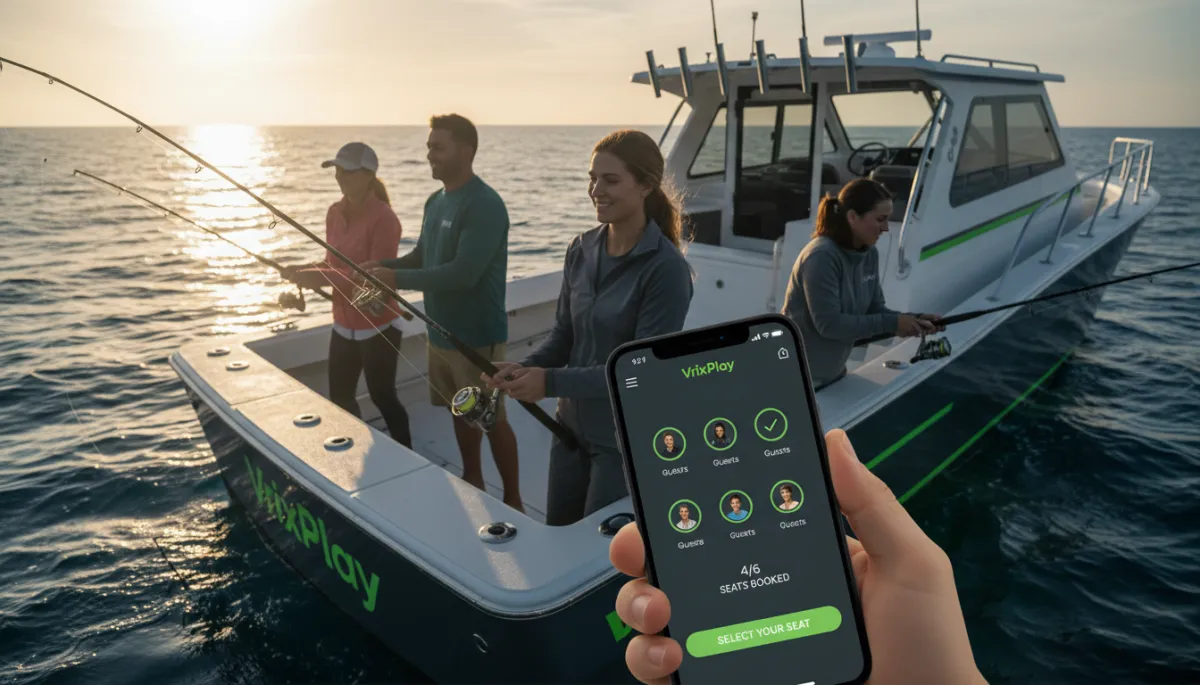
A digital workflow solves this. When the booking is confirmed, the primary guest gets a link to complete the manifest — add their guest list, confirm headcount, and have each guest sign the liability waiver from their own phone. This happens in the days before the charter, not in the first ten minutes of boarding.
On the morning of departure, you have a closed manifest, everyone has signed, and the only thing left to do is scan QR codes and cast off on time. No clipboard. No paperwork stack. No holding the lines while one person tracks down their one guest who "forgot" to sign.
Crew scheduling: who is on what vessel and when
For multi-vessel operations or operators who staff charters differently based on the event type, crew assignment is its own coordination problem. The captain needs to know what they are running. The mate needs to know when to be at the slip. If you are adding a hostess for a private event, she needs the guest count and the itinerary.
The right system lets you assign captain, mate, and any additional crew directly to the charter record — and sends them the details automatically. No group text the night before. No captain finding out the guest count from a forwarded email chain. Everyone who needs information about the charter gets it from the same place the booking lives.
The day of the charter
When the pre-work is done right, the morning of the charter is quiet. The deposit is collected, the balance is either paid in advance or set up to process at the dock. The manifest is closed. The crew is assigned and briefed. The guests have their QR boarding passes.
Boarding is a scan, not a scramble. Lines come off on time. The charter starts the way it should — relaxed and organized — because the chaos was handled days earlier by a process that ran without you managing every piece of it by hand.
That is what the difference between a great charter operation and a good one usually comes down to. Not the vessel. Not the itinerary. The systems behind the booking.
Add-ons that sell before the charter starts
One more thing worth building into your booking flow: add-ons. Catering, bar packages, water toys, onboard photography, and custom decorations for birthdays or corporate events are all things guests are willing to pay for when they are in booking mode. They are considerably harder to upsell once the charter is confirmed and the deposit is in.
When your checkout includes optional add-ons before the guest finalizes the booking, you are capturing revenue that would otherwise require a follow-up phone call — or never get captured at all. On a $4,000 charter, a $350 catering package and a $150 bar upgrade are not hard sells. They are conveniences the guest was already thinking about.
A note on the guest experience
Everything described here — the structured inquiry, the deposit that holds the date, the digital manifest, the pre-signed waivers, the clean boarding — is also just a better experience for the guest.
Guests who book a crewed yacht charter are spending meaningful money. They expect a premium process. When your booking flow feels organized and professional from the first inquiry, it sets the tone for the charter itself. It signals that you run a tight ship before anyone is even aboard.
That reputation is worth more than any single booking.
What to do if your current process still runs on email
If your charter bookings still live in an email thread, the shift is not as complicated as it sounds. The basic things you need are: a booking page with real availability, a request-to-book flow you can price and confirm, a deposit checkout that moves funds directly to your account, and a digital waiver and manifest workflow that runs between confirmation and departure.
VrixPlay is built for exactly this — crewed yacht and catamaran operators who sell day charters, sunset sails, and private events on the water. The inquiry-to-deposit flow, guest manifests, waiver collection, crew assignment, and add-on sales are all part of the same system, not five separate tools stitched together.
If you want to see how it works, you can explore the yacht charter software overview or start free with no card required.
The email chain has done its job. It got you here. A real booking system takes it from there.