The Real Cost of Running a Fishing Charter Business on the Florida Gulf Coast
Learn the real costs of running a Florida Gulf Coast fishing charter, including fuel, maintenance, permits, crew, marketing, software, and downtime.
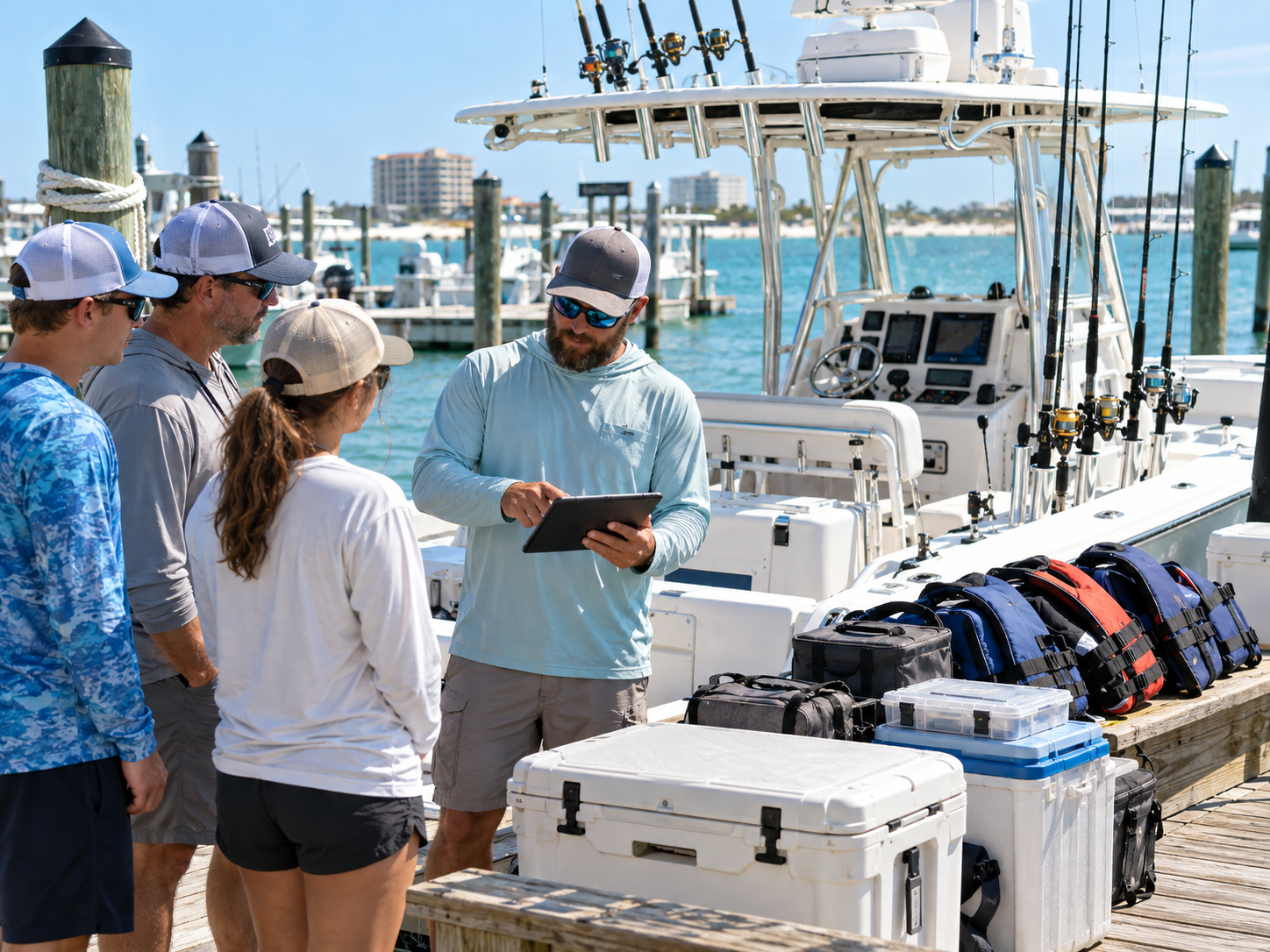
A full calendar can make a fishing charter business look simple from the outside. Run the trip, collect the payment, clean the boat, and do it again tomorrow. Captains know much more happens behind the scenes.
Fuel, boat payments, insurance, tackle, maintenance, dockage, permits, crew, marketing, payment processing, and booking costs all take a piece of every trip. Then there are expenses that show up when something breaks, weather keeps the boat tied to the dock, or the calendar slows down after the busy season.
For fishing charter captains along the Florida Panhandle, understanding the real cost of operating the business matters because revenue alone doesn't show how well the business is doing. A $1,500 charter is not $1,500 in profit.
Knowing what it costs to run each trip helps you set better prices, decide which expenses to keep, and understand how much of every booking stays with your business.
What Does It Cost to Run a Fishing Charter Business?
There is no single number that applies to every fishing charter business.
A captain running a smaller inshore boat from Panama City will have a very different cost structure than an offshore charter running out of Destin. Boat size, engines, trip length, fuel consumption, crew size, marina costs, target species, insurance, permits, and trips per season can all change the numbers.
A better way to understand your costs is to separate them into two groups.
Fixed costs continue whether you run a trip or not.
Variable costs usually increase as you run more trips.
Both matter when deciding what a charter needs to charge to remain profitable.
The Boat Is Usually the Biggest Piece of the Puzzle
The boat makes the business possible, but owning and operating it creates several different expenses.
A financed vessel has a monthly payment. A boat that is paid off may eliminate that payment, but it does not eliminate maintenance. Engines still need service. Pumps fail. Electronics eventually need to be repaired or replaced. Batteries wear out. Upholstery gets damaged. The bottom needs attention. Trailers, if used, need maintenance too. Saltwater is not especially forgiving.
Captains who have been in the business long enough know that maintenance is not something that happens only when there is a problem. Routine maintenance is part of the cost of keeping the boat available for customers.
That makes maintenance different from many other business expenses. Skipping it may save money this month but create a much larger expense later.
It can also cost you booked trips if the boat cannot leave the dock.
Fuel Can Change the Profitability of a Trip Quickly
Fuel is one of the most obvious variable expenses in a charter business.
A short inshore trip may use relatively little fuel compared with a longer offshore trip. A full-day run that requires traveling farther offshore can change the cost of the trip substantially.
That is why two trips with similar prices may not produce similar profits.
Captains should know approximately how much fuel each trip type normally requires and factor that into pricing. The goal is not to predict fuel consumption down to the last gallon. It is to have a realistic average for each type of charter.
If your fuel cost changes significantly, your pricing may eventually need to change too.
Otherwise, the boat can stay busy while the amount you actually make from each trip quietly gets smaller.
Bait, Ice, Tackle, and Gear Add Up
These expenses may seem small compared with fuel or a boat payment, but they happen over and over again.
Bait, ice, leaders, hooks, weights, line, lures, cleaning supplies, safety equipment, and replacement tackle are all part of operating the boat.
One broken rod is not likely to change the season.
Replacing equipment throughout hundreds of trips can.
A useful way to handle these smaller operating expenses is to calculate an average cost per trip or per month. That makes them part of the normal business budget instead of treating every purchase as an unexpected expense.
Crew Costs Need to Be Part of the Trip Price
If you use a mate, deckhand, second captain, or other crew members, their compensation needs to be included when evaluating the profitability of a trip.
That may sound obvious, but owners sometimes look at gross booking revenue without subtracting what it takes to actually operate that charter.
Crew also represents more than wages or trip pay. Depending on how the business is structured, there may be payroll, tax, insurance, or other employment costs that need to be considered.
A boat that requires additional crew to provide a safe and good customer experience should be priced accordingly.
Trying to compete by lowering prices without understanding those costs can create a schedule full of trips that do not leave enough money behind.
Florida Charter Licenses and Permits Are Part of Doing Business
Operating a legitimate charter business also comes with licensing and regulatory expenses.
The Florida Fish and Wildlife Conservation Commission explains Florida's saltwater charter licensing requirements. FWC states that a charter captain or boat license is required when paying customers are being carried for the purpose of taking or attempting to take saltwater fish.
FWC also notes that Florida saltwater fishing guides must comply with U.S. Coast Guard requirements and that operators of for-hire vessels are required to hold the appropriate captain license or Merchant Mariner Credential.
Captains who operate in federal waters may have additional permit requirements depending on the fishery.
NOAA Fisheries maintains information about Southeast federal charter and headboat permits, including permits associated with Gulf reef fish and coastal migratory pelagic fisheries.
These requirements can change, and the permits needed by one operation may not be the same as those needed by another. Captains should always verify the current requirements for their vessel, fishing area, and target species instead of relying on an old checklist.
Insurance Is a Cost You Hope You Never Need
Insurance is another major fixed cost for many charter operations.
The right coverage depends on the vessel, business structure, passengers, crew, operating area, and other factors. It is an expense that may not feel connected to an individual trip, but it still needs to be covered by the revenue those trips generate. The same is true for dockage or marina expenses.
If your slip costs the same amount in January as it does in June, then your busy-season revenue has to help support slower periods. That is one reason looking only at daily revenue can be misleading. The business has to work across the entire year.
Marketing Has a Cost, Even When You Do It Yourself
Charter captains need customers, and getting those customers usually costs something.
That might include Google Ads, Facebook or Instagram advertising, search engine optimization, photography, website work, sponsorships, printed materials, marketplace commissions, or a marketing company. Even organic marketing has a cost if you are doing it yourself.
The time you spend responding to social media messages, updating photos, writing posts, answering inquiries, and managing your Google Business Profile is time you are not spending on something else.
This does not mean marketing should be viewed as a bad expense. Good marketing produces bookings.
The important question is whether you know what you are getting from it.
If you spend $1,000 on a campaign and it generates several profitable trips, that may be money well spent. If you continue paying for a service because you have always used it but cannot connect it to inquiries or bookings, it deserves a closer look.
VrixPlay has a guide to the charter KPIs that show what the season is really doing, including cost per new booking. Tracking numbers like that can help captains decide where their marketing money is actually working.
Marketplace Commissions Can Become a Significant Expense
Online marketplaces can be useful.
They can put a charter in front of travelers who might never have discovered the business otherwise. For a newer charter company, that exposure can be particularly valuable.
But the cost needs to be understood. A commission attached to a booking is still part of the cost of acquiring that customer. That is why it helps to know where each booking comes from.
If your own website generates a direct booking, that customer may have a very different acquisition cost than someone who comes through a third-party marketplace.
The goal does not have to be eliminating marketplaces completely. A better goal is understanding the value of each channel and building enough direct business that your company is not completely dependent on one outside source.
Your Booking Software Is Another Business Expense
Booking software can be easy to overlook because the fee may appear small compared with fuel, insurance, or a boat payment. Over an entire season, however, software costs matter.
Some systems charge monthly fees. Others charge per booking. Some charge by user, boat, feature, or transaction. Marketplaces may charge a larger commission because they are also providing customer acquisition.
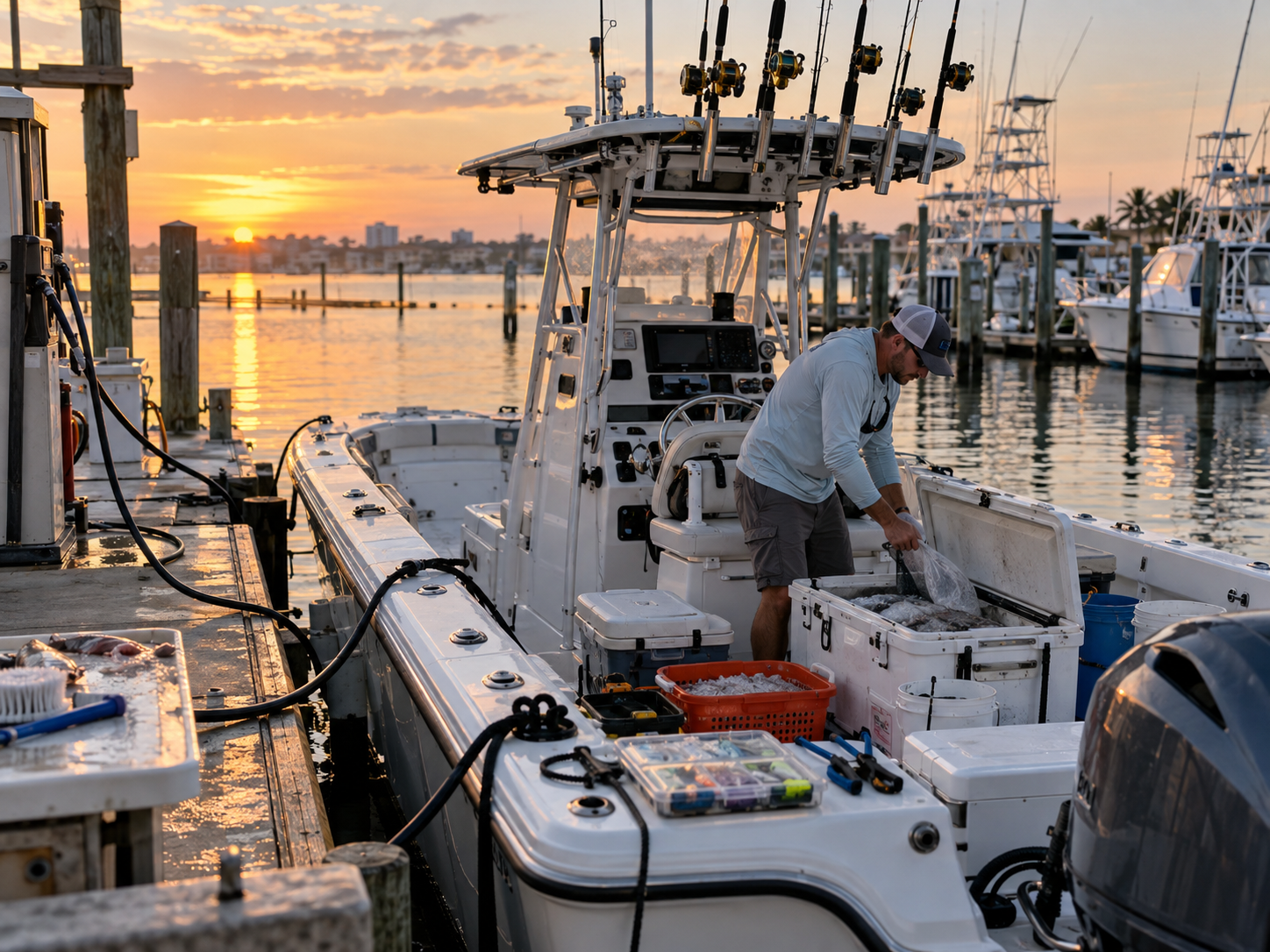
The important thing is to compare the complete cost rather than looking at one advertised number.
VrixPlay takes a different approach. Its fishing charter booking software has no monthly software subscription and charges 3% per booking. Standard Stripe payment processing is separate.
That structure matters for seasonal charter businesses because the cost moves with the bookings.
A busy June produces more booking fees because the business is generating revenue. A slow winter month with no completed VrixPlay bookings does not create another monthly VrixPlay software bill.
Captains can see the full breakdown on the VrixPlay pricing page.
Weather Creates a Cost That Does Not Always Show Up on a Receipt
One of the most difficult costs to measure is downtime.
A rough Gulf can wipe an entire day off the calendar. A tropical system can affect several days. Mechanical problems can cancel trips. A slow tourism week can leave open spots that cannot be recovered later.
The calendar is perishable.
If Tuesday morning passes with an empty boat, you cannot sell that Tuesday morning charter next month.
This is why a profitable charter business needs enough margin during good periods to absorb bad ones.
It is also why fixed monthly expenses deserve attention. They continue when the boat is running and when it is not.
For Panhandle captains, this becomes especially noticeable during slower parts of the year when summer booking volume is no longer covering expenses as quickly.
A Full Calendar Does Not Always Mean a Profitable Business
Imagine two captains who each generate the same amount of charter revenue.
Captain A has high marketplace commissions, an expensive monthly software subscription, poorly tracked fuel costs, and spends heavily on advertising without knowing which campaigns generate customers.
Captain B knows the average operating cost of each trip, tracks where bookings come from, watches marketing expenses, and has developed a steady flow of direct customers.
Their gross revenue may look identical.
Their bank accounts may tell very different stories.
This is why gross sales should never be the only number a captain watches.
You need to know what remains after the trip is over.
Calculate What Each Type of Trip Actually Costs
You do not need a complicated accounting system to start understanding your numbers.
Take each major trip type you offer and estimate the costs directly associated with running it. Include fuel, crew, bait, ice, tackle, booking costs, payment processing, and other expenses that change when the trip runs.
Then look separately at annual or monthly costs such as insurance, dockage, boat payments, software subscriptions, licenses, maintenance reserves, and marketing.
The goal is to answer a simple question:
After covering the real cost of running this trip and supporting the business around it, is the price still working?
If you cannot answer that question, lowering your price to compete with another captain is a dangerous game.
You do not know their expenses, debt, boat, crew arrangement, or business goals.
Your price needs to work for your operation.
Direct Bookings Give Captains More Control Over the Numbers
You cannot control the price of fuel, the weather, or when an engine component decides it has had enough.
You can control more of the way customers find and book your business.
Building direct bookings gives you an opportunity to reduce reliance on high-cost acquisition channels, keep your customer relationships organized, and make it easier for previous guests to return.
It also gives you better visibility into your own business.
When bookings, deposits, passenger information, customer records, payments, and schedules are organized in one place, it becomes easier to see what is happening instead of trying to piece the season together from texts, emails, calendars, and payment apps.
For a Florida Panhandle charter captain, the goal is not simply to keep the boat busy.
The goal is to run trips that make financial sense, keep customers coming back, and build a charter business that can handle both a packed summer calendar and the slower weeks that come after it.
Knowing what each trip really costs is one of the best places to start.