How Florida Panhandle Fishing Charter Captains Can Get More Direct Bookings
Learn how Florida Panhandle fishing charter captains can get more direct bookings through better websites, online booking, reviews, Google, and customer retention.
How Florida Panhandle Fishing Charter Captains Can Get More Direct Bookings
Running a fishing charter business along the Florida Panhandle is a little different from running most businesses. Your office is a boat. Your schedule depends on weather, seasons, fish, tourists, and sometimes what the Gulf decides to do that morning. At the same time, customers expect to be able to find your business, compare trips, check availability, and book from their phone.
That is why direct bookings have become so important for charter captains. A direct booking is simply a trip booked directly with your charter company instead of through a third-party marketplace. That could happen through your website, a phone call, a returning customer, Google, social media, or a referral.
The goal is not necessarily to stop using every marketplace. Those platforms can introduce your charter to people who may never have found you otherwise. The goal is to build a business where you are not completely dependent on them.
For Florida Panhandle captains, especially in competitive destinations such as Destin, Fort Walton Beach, Panama City Beach, Pensacola, and the communities along 30A, developing a dependable direct booking channel can give you much more control over your business.
Why Direct Bookings Matter to a Charter Captain
When someone books directly with your company, the relationship starts with you. They know your charter name. They visit your website. They communicate with your crew. They experience your boat and your service. Most importantly, you have an opportunity to turn that guest into someone who books with you again.
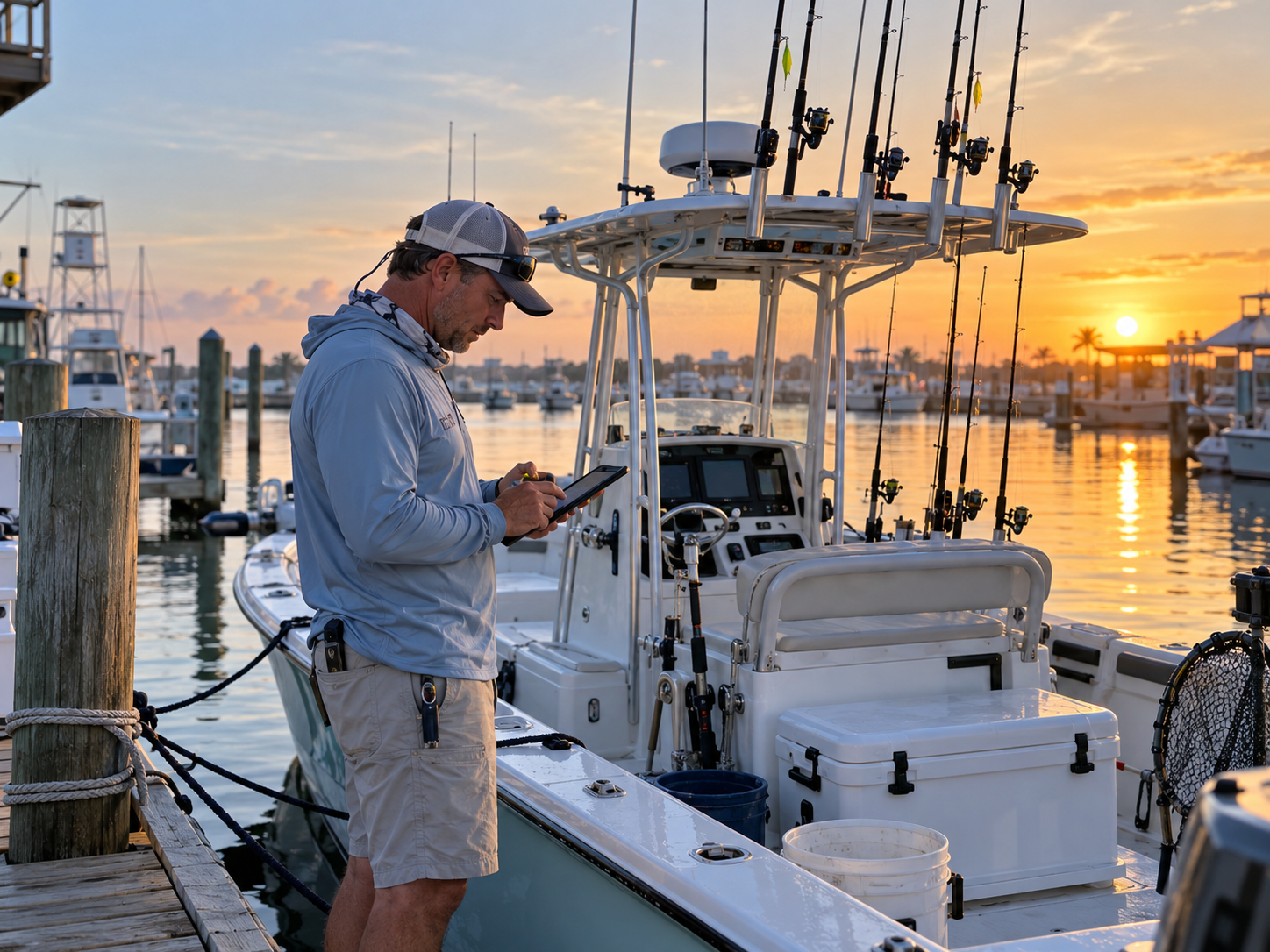
That matters in the Florida Panhandle because a large percentage of charter customers are visitors. Families return to Destin, Panama City Beach, Fort Walton Beach, and surrounding communities year after year.
If they had a great day fishing with you last summer, you should not have to hope they happen to find your listing again next year. You want them searching for your charter company.
Your Website Should Make Booking Easy
A charter website should do more than show pictures of big fish. Those pictures are important, of course. People want to see what the experience is actually like. But once someone decides they want to fish with you, the website needs to help them take the next step.
A good charter website should make it easy to understand:
What trips you offer
How long each trip lasts
What the trip costs
What is included
How many people can go
Where the boat leaves from
What customers should bring
Your cancellation and weather policies
How to reserve a date
And the booking button should not be buried at the bottom of the page. If someone is sitting in a condo in Destin at 9:30 at night looking for a fishing trip later in the week, you want them to be able to book while they are interested. They should not have to submit a form and wait until the next morning for someone to call them back.
VrixPlay's fishing charter booking software is designed around that type of operation. Captains can manage availability, deposits, waivers, passenger information, crew assignments, and multiple boats from one system. That gives the customer an easier booking process while taking work off the captain's plate.
Make Google Work Harder for Your Charter Business
Many tourists start looking for a charter after they have already arrived on the Florida Panhandle.
They search things like:
"fishing charter near me"
"Destin fishing charter"
"Panama City Beach deep sea fishing"
"fishing charter Fort Walton Beach"
That makes your Google Business Profile extremely important.
Make sure the basics are correct.
Your charter name, phone number, website, service information, photos, and business details should stay accurate. Google also allows eligible businesses to add links that help customers take actions directly from Search and Maps. Google's Business Profile guidance explains how business links can be managed.
Do not treat your Google profile like something you created five years ago and never touched again. Add recent boat photos. Add catch photos. Answer reviews. Check your information before the busy season starts. A tourist comparing three charter companies may never make it past Google before deciding who to call.
Ask Happy Customers for Reviews
Most captains already understand the value of reviews. The part that often gets missed is timing. A customer who just stepped off your boat after catching the biggest fish of his vacation is much more likely to leave a review than someone receiving a random email three weeks later.
Build the review request into your normal process.
Trip ends.
Fish get cleaned.
Pictures get taken.
Customer leaves happy.
Then the review request goes out.
VrixPlay can automatically send a review request after a completed trip, which helps turn successful charters into proof for future customers. That proof becomes especially valuable when someone is comparing several charter businesses that appear similar online.
Stop Making People Call Just to Find Out What a Trip Costs
There are situations where a customer needs to talk to the captain before booking. But asking every potential customer to call for basic information creates unnecessary friction. Your trip pages should answer the questions customers ask every week.
For example:
4-Hour Inshore Trip
Explain what type of fishing customers can expect, who the trip works well for, the number of passengers allowed, departure time options, and price.
6-Hour Offshore Trip
Explain how this trip differs from the four-hour option and why someone might choose it.
Full-Day Trip
Tell people what makes the longer day worthwhile. Clear choices help people make decisions. Confusing choices make them keep searching.
Do Not Hide Your Availability
One of the advantages large travel websites have is convenience. People can see what is available immediately. Independent charter companies should offer the same convenience whenever possible.
If Friday morning is booked but Friday afternoon is available, show it. If Saturday is open, let the customer reserve Saturday. Every extra call, text, or email creates another opportunity for the customer to get distracted or book somewhere else.
You can still maintain control over your schedule. VrixPlay, for example, allows captains to receive trip requests and approve or decline them rather than giving the internet unlimited control over the calendar.
Use Marketplace Bookings to Create Future Direct Customers
A marketplace customer does not have to remain a marketplace customer forever. Your job starts when they step on the boat. Give them a great trip. Make sure they know the name of your company.
Encourage them to follow your social media. Ask for a review. Keep in touch when appropriate. When that family returns to the Panhandle next year, you want them typing your charter name into Google instead of starting the entire search over again.
There is nothing wrong with allowing a marketplace to help introduce a new customer to your company. The mistake is failing to build a relationship after that introduction.
Keep Your Customer Information Organized
A stack of waivers and a contact list scattered between text messages is difficult to market to later. Your past customers are one of the most valuable assets your charter business has. They already know you. They already trusted you once. They already know what it feels like to spend a morning or afternoon on your boat.
Keeping organized customer records gives you opportunities to reach out before the next season, promote new trips, announce openings, or simply remind past guests that you are still fishing.
Direct booking is not only about getting today's customer. It is about making next year's booking easier too.
Keep Up With Seasons and Regulations
Fishing along the Florida Gulf Coast changes throughout the year. Different species create different opportunities, and seasons can affect what customers want to book. That makes timely website content useful.
Instead of leaving your website unchanged all year, give customers helpful information about what they might expect during different parts of the season.
When discussing fishing seasons or regulations, always point customers toward official information rather than relying on an old blog post. NOAA Fisheries maintains current information on federal Gulf fishing regulations, closures, and seasons. Captains can check current Gulf fishing regulations through NOAA Fisheries.
This is useful for customers too. A visitor may have heard about red snapper, amberjack, grouper, or another species and assume it is available whenever they visit. Your website can help set realistic expectations while directing guests to the appropriate official information.
Make It Easy to Book From a Phone
Think about how many of your customers are looking for things to do while already on vacation. They are not sitting behind a desktop computer. They are sitting by the pool, riding in the passenger seat, eating breakfast, or relaxing at a rental house with their phone. Your website needs to work well on that little screen.
A potential customer should be able to:
Find your charter.
Understand the trip.
Check the price.
See availability.
Reserve the trip.
Pay the deposit.
Without fighting the website. This sounds basic, but it can make a real difference.
Direct Bookings Do Not Mean Doing Everything Yourself
Some captains hear "direct bookings" and picture spending even more time on the phone. That should not be the goal. A strong direct booking system should actually reduce the amount of administrative work required to run a trip.
Once the customer books, the system should help handle things such as deposits, confirmations, reminders, waivers, passenger information, and scheduling. VrixPlay was built around that idea.
The software is $0 per month with a 3% fee on bookings, and VrixPlay currently includes a website for businesses that sign up. Standard Stripe processing is separate. That percentage model can also make sense for seasonal charter businesses. When the calendar slows down, you are not paying another monthly software bill for a system that is barely being used.
Build a Charter Business People Remember
There is plenty of competition along the Florida Panhandle. A customer searching for a fishing trip may have dozens of choices. You cannot control every marketplace ranking, algorithm change, or competitor that pops up next season.
You can control the experience customers have with your business.
You can build a good website.
You can make booking easy.
You can collect reviews.
You can stay in touch with customers.
You can make sure someone who had an incredible trip with you remembers exactly who took them fishing.
That is what direct booking is really about. It is not simply avoiding a fee. It is building a charter company that customers can find, book, remember, and come back to.
And for a Florida Panhandle captain trying to build something that lasts beyond the next busy weekend, that is a much stronger place to be.