How to Increase Revenue Per Rental Slot: Add-Ons That Actually Work for Watersports Operators
Discover practical add-on strategies that watersports rental operators can use to increase revenue per booking slot — without adding more equipment or staff.
Peak season is a funny thing. You can run every jet ski and paddleboard at full capacity from sunrise to late afternoon, finish the day completely exhausted, and still look at your numbers and wonder if you're leaving money on the table.
Most watersports rental operators are. Not because they're undercharging for equipment time — that's usually priced close to what the market supports — but because the slot itself is the only thing they're selling. The guest shows up, pays for two hours on a jet ski, and walks away. No wetsuit. No guided tour. No second rider. Just the base rental and a handshake.
Add-ons close that gap. And they don't require more boats, more beach, or more staff. They require a checkout that makes it easy to say yes before the guest ever gets to the launch.
Why Most Add-On Attempts Fail at the Counter
The classic approach is upselling at check-in. Guest walks up, staff runs through the waiver, mentions the wetsuit rental offhand, guest says no thanks, everyone moves on. It doesn't work well for a few reasons.
First, the customer is already in motion. They drove to the beach, they're watching the water, they want to get out there. A sales pitch at the counter is friction — something to get through, not an offer they're evaluating carefully. Second, the staff is managing a line of people, handling waivers, checking IDs, and trying to get the previous group's skis back in without a collision. That's not an environment where thoughtful upsells happen.
The more reliable approach is building add-ons directly into the booking checkout, before anyone arrives. When a guest is sitting at home booking their jet ski rental for Saturday, they have time. They're in a good mood, they're planning, and they're already spending money. That's when the wetsuit, the guided sandbar tour, and the paddleboard upgrade actually convert.
Add-Ons Worth Building Into Your Checkout
Not every add-on is worth the operational complexity it creates. The ones that work best are either low-effort to deliver at the launch (a vest, a tube, a cooler) or high-margin enough to justify the coordination (a guided trip, a lesson). Here's what tends to perform well for watersports operators:
Safety and Comfort Gear
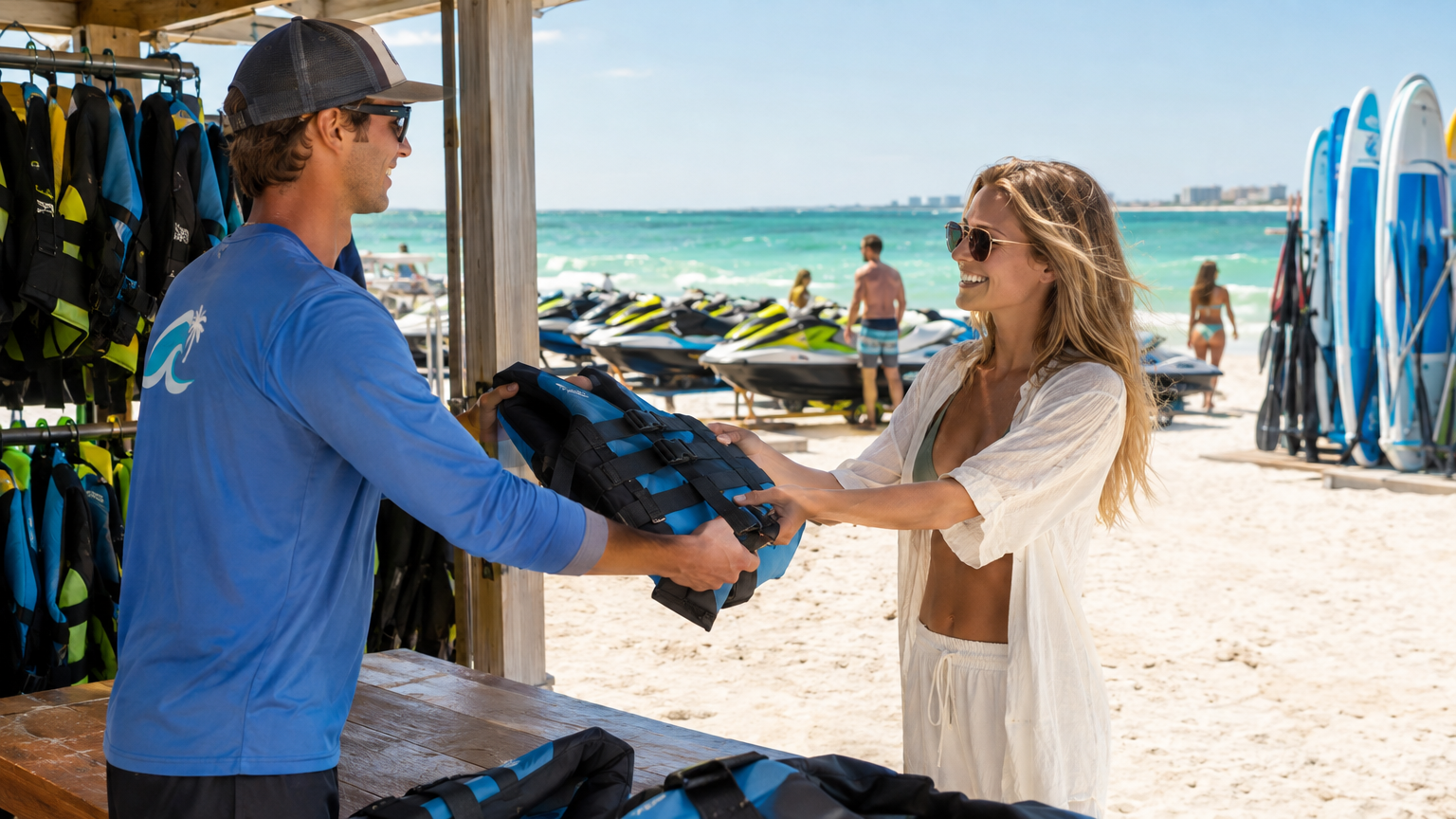
Life vests, wetsuits, and water shoes are the simplest add-ons you can sell. Guests often assume they need to bring their own or simply go without — if you show it as a $12 add-on during checkout, a solid percentage will just check the box. The key is presenting it at the right moment in the booking flow, not buried at the bottom of a confirmation email they won't re-read.
Extended Time Blocks
Some operations offer a base 30-minute or one-hour slot and then sell upgrade blocks — a half-hour extension, a full-day rate, or a sunrise-to-noon package. These work particularly well if you have guests coming from resorts or vacation rentals who don't have another activity locked in. They're not comparing prices; they're on vacation and would happily spend another hour on the water if someone offers it cleanly.
Guided Tours and Sandbar Trips
A guided jet ski tour to a nearby sandbar, island, or wildlife area is a genuinely different product from a free-ride rental. It commands a meaningfully higher price point, requires less from the guest (they follow a guide instead of navigating), and tends to get better reviews — which feeds your repeat business. If you're on a coastline with any natural landmarks nearby, this is worth building out properly as a bookable product, not just something you offer verbally to guests who ask.
Instruction and Safety Briefings
First-time riders are a large portion of your walk-up and online traffic. Many of them feel uncertain about operating a jet ski for the first time and will pay for a short instruction session before their rental starts. A 15-minute one-on-one orientation at a small add-on price gives nervous guests confidence and reduces the risk of guests coming back with damage from operator error. Worth building in.
Coolers, Dry Bags, and Gear Packages
Practical gear that guests would otherwise need to bring from their rental condo or hotel room sells when it's priced right and shown clearly. A floating dry bag that keeps their phone safe. A cooler to bring drinks on a sandbar trip. A waterproof phone case. These are convenience purchases, not big decisions. They work because the buyer is already committed to the trip and doesn't want to leave something important behind.
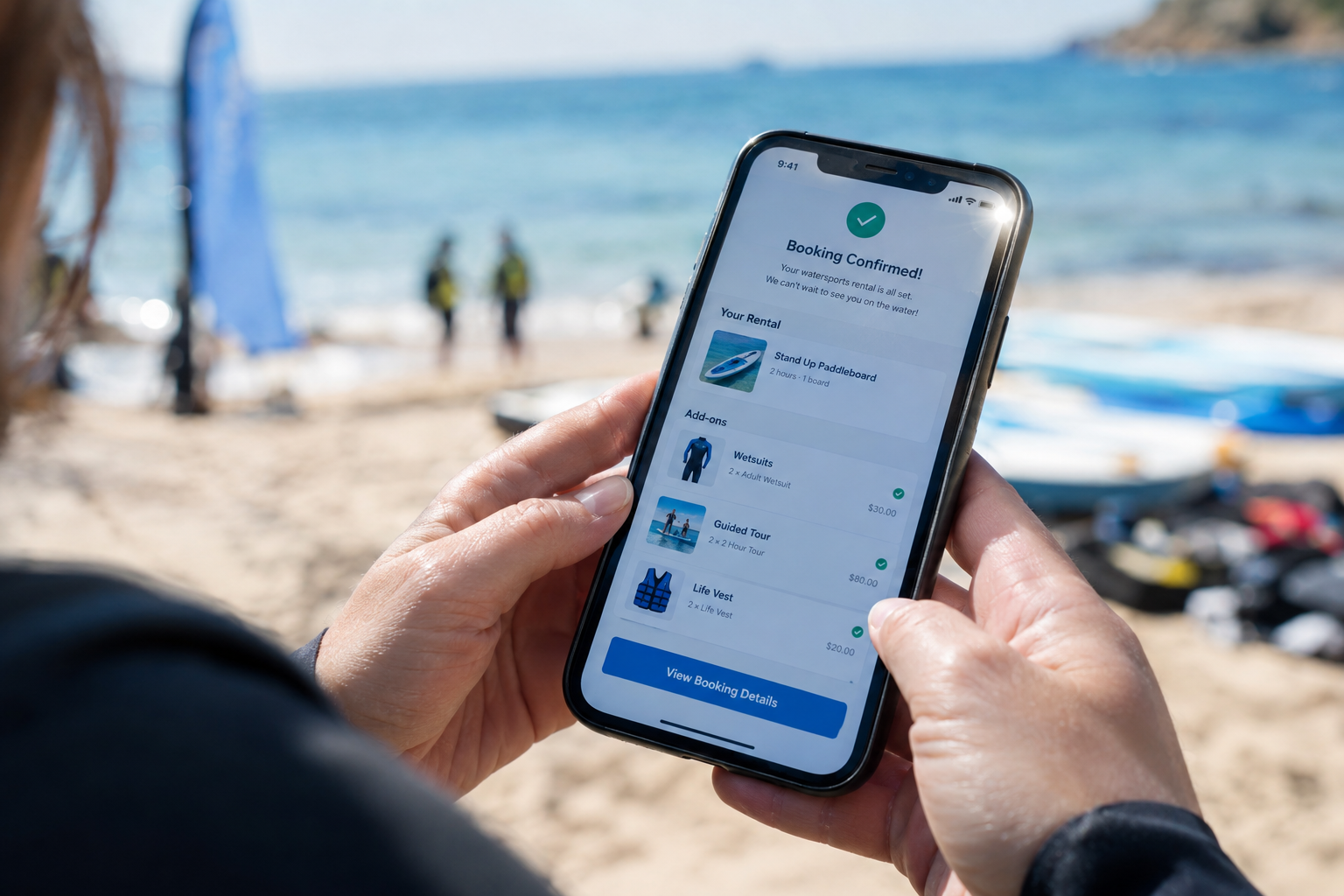
Guests who select add-ons during online checkout convert at higher rates than those upsold at the counter — the buying decision happens while they're planning, not while they're rushing to get to the water.
Pricing Add-Ons Without Undermining Your Base Rate
One concern operators raise is whether add-on pricing makes the total look expensive compared to competitors. It's a reasonable instinct, but the data doesn't usually support it. Guests comparing rental options are looking at the base slot price and the experience reputation. A $65 two-hour jet ski rental with optional extras doesn't look more expensive than a $65 rental with nothing — it looks like a more complete operation.
The practical rules for add-on pricing:
- Keep each add-on decision small. A $15 wetsuit and a $20 dry bag don't trigger price sensitivity the way a $95 upgrade does. Stack small, easy yeses.
- Bundle where it simplifies the decision. A "Beach Ready" package that includes a dry bag, life vest upgrade, and water shoes at a slight discount converts better than three separate line items. The guest decides once instead of three times.
- Price guided trips separately. Don't fold them into a "premium rental" that blurs the value of the guide. A guided tour is its own product and deserves its own price point, usually 1.5x to 2x the base rental for the same time.
- Show add-ons before the total appears. If the guest sees the total price first and then has to actively add items, the anchoring effect works against you. Present add-ons while they're still in the decision flow, not as an afterthought at checkout summary.
Making Minor Sign a Waiver for Every Add-On Scenario
One operational snag that add-ons introduce: when a guest books a jet ski rental and adds a guided tour, those might carry different waiver requirements. The tour might have different risk disclosures, age requirements, or physical condition acknowledgments than the base rental.
If your booking system handles waivers tied to individual products rather than just the base booking, this resolves itself. Guests sign whatever applies to what they actually booked, including the extras, before they arrive. If waivers are only attached to the main booking, you'll end up collecting additional paper at the launch — which defeats the efficiency gains you built add-ons to create in the first place.
Worth reviewing how your waiver workflow handles add-on products before you scale this up for peak season.
The Inventory Problem Add-Ons Can Create
Add-ons only work operationally if your system knows you've sold them and can prevent overselling. If you have six wetsuits in various sizes and your checkout doesn't track which sizes have sold into which slots, you'll end up with guests who booked a wetsuit and show up to find you're out of their size.
The solution is treating add-on inventory the same way you treat equipment inventory — with real unit counts that the booking calendar enforces, not a mental note or a clipboard at the counter. This is especially true for guided tours, where you have a maximum group size per guide and a fixed departure window. If the tour is full, the checkout should stop selling it. If it isn't handled at the system level, you'll oversell it at some point and deal with that conversation at the launch.
A Simple Framework for Getting Started
If you haven't built add-ons into your checkout yet, start narrow:
- Pick two or three add-ons with zero operational complexity. A floating dry bag, a life vest upgrade from standard to premium, a 30-minute time extension. Things you already have on the beach that just need a price attached in checkout.
- Add them to your booking flow and watch what guests select. You don't need to optimize anything for the first two weeks. Just see what converts organically when it's presented at checkout.
- Identify one experience-based add-on worth building properly. A guided sandbar tour, a beginner lesson, a sunset departures package. Something with a real price premium and a natural upsell angle for guests who are already in a vacation mindset.
- Set inventory limits on anything that can be oversold. Do this before the first booking with the add-on, not after you've already oversold the wetsuit rack on a holiday weekend.
The goal isn't to turn your rental operation into a merchandise store. It's to give guests a natural way to spend a little more on things that actually improve their time on the water — and to capture that revenue in checkout rather than leaving it on the beach.
Where VrixPlay Fits
VrixPlay's watersports rental platform includes add-on and gear selling built directly into the booking checkout. You set your equipment inventory, your time slots, your add-on items, and the system handles the rest — including enforcing unit counts, attaching waivers to the right products, and showing staff exactly what each arriving group has booked. No monthly fee. Three percent per booking, and VrixPlay only gets paid when you do.
If you're ready to build a checkout that sells more than just the slot, explore VrixPlay's watersports rental platform and start free.