How to Check In a Beach Full of Renters Without a Line at the Counter
A practical check-in workflow for watersports rental operators: QR codes, pre-signed waivers, and slot management to keep the launch moving on busy days.

Peak season at a busy beach rental stand comes down to a window of about twenty minutes. That is when the 10 o'clock slots overlap with the 10:30 walk-ups, three families are asking about availability at the same time, and someone is still signing a paper waiver at the counter while the jet ski they reserved is sitting idle at the dock.
The counter becomes the bottleneck. And the counter is almost always the bottleneck for the same reasons: waivers collected on-site, slot availability tracked in a head or on a clipboard, and no fast way to confirm who has actually paid for what before they touch the equipment.
There is a cleaner way to run the morning. It does not require extra staff. It just requires moving the work off the counter and into the booking flow before the guest ever arrives.
The real cost of a slow check-in
A ten-minute check-in process does not sound catastrophic until you do the math on a Saturday in July. If your busiest launch has twelve slots between 9 and 11 AM and each group takes eight minutes to process at the counter, you are spending nearly an hour and a half on paperwork during the two most valuable hours of the day. Some groups will leave. Others will complain. The ones who stay will start the experience frustrated, which affects reviews.
Slow check-in also creates inventory confusion. When a slot is occupied by someone still signing at the counter, you cannot see from the dock whether the equipment is free or in use. Staff guess. Equipment gets double-counted. Slots that should be open look unavailable, and you undersell the morning.
Move waivers out of the check-in window
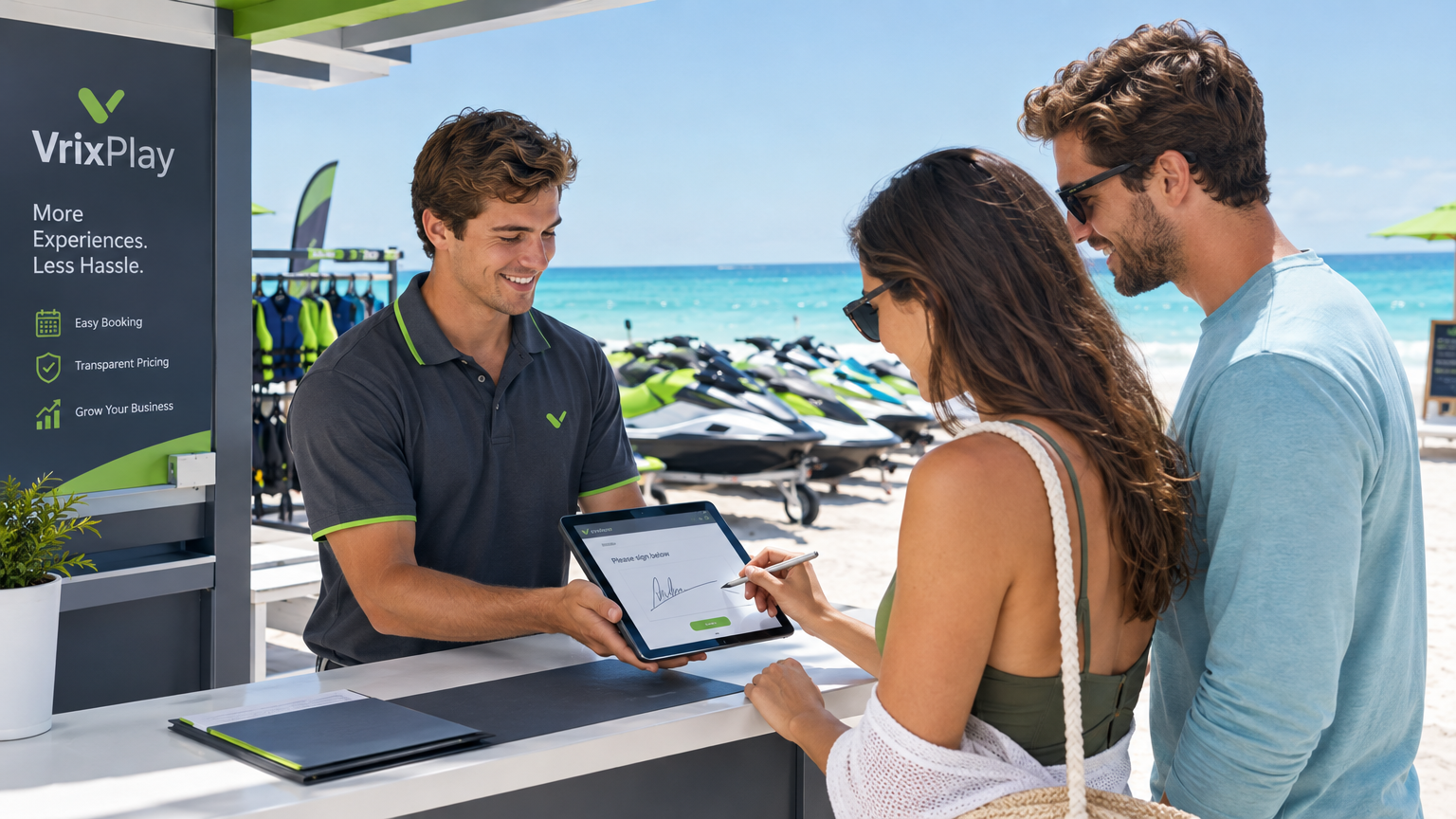
The single change that has the most impact on counter speed is getting waivers signed before the guest arrives. When a customer books a jet ski or paddleboard rental online, they should receive a digital waiver link with the confirmation. If they book by phone, the waiver goes out in the follow-up message.
By the time the group shows up at the launch, the waiver is done. The minor consent forms are done. You are not asking a parent to read and sign a liability document while their kids are running toward the water.
VrixPlay handles this with sign-once waivers tied to every booking. A guest signs once, and that signature is attached to every future reservation they make with you. For a family that rents from you three times in a summer, the waiver conversation happens once, in June, from their couch.
Assign QR codes at booking, scan them at the launch
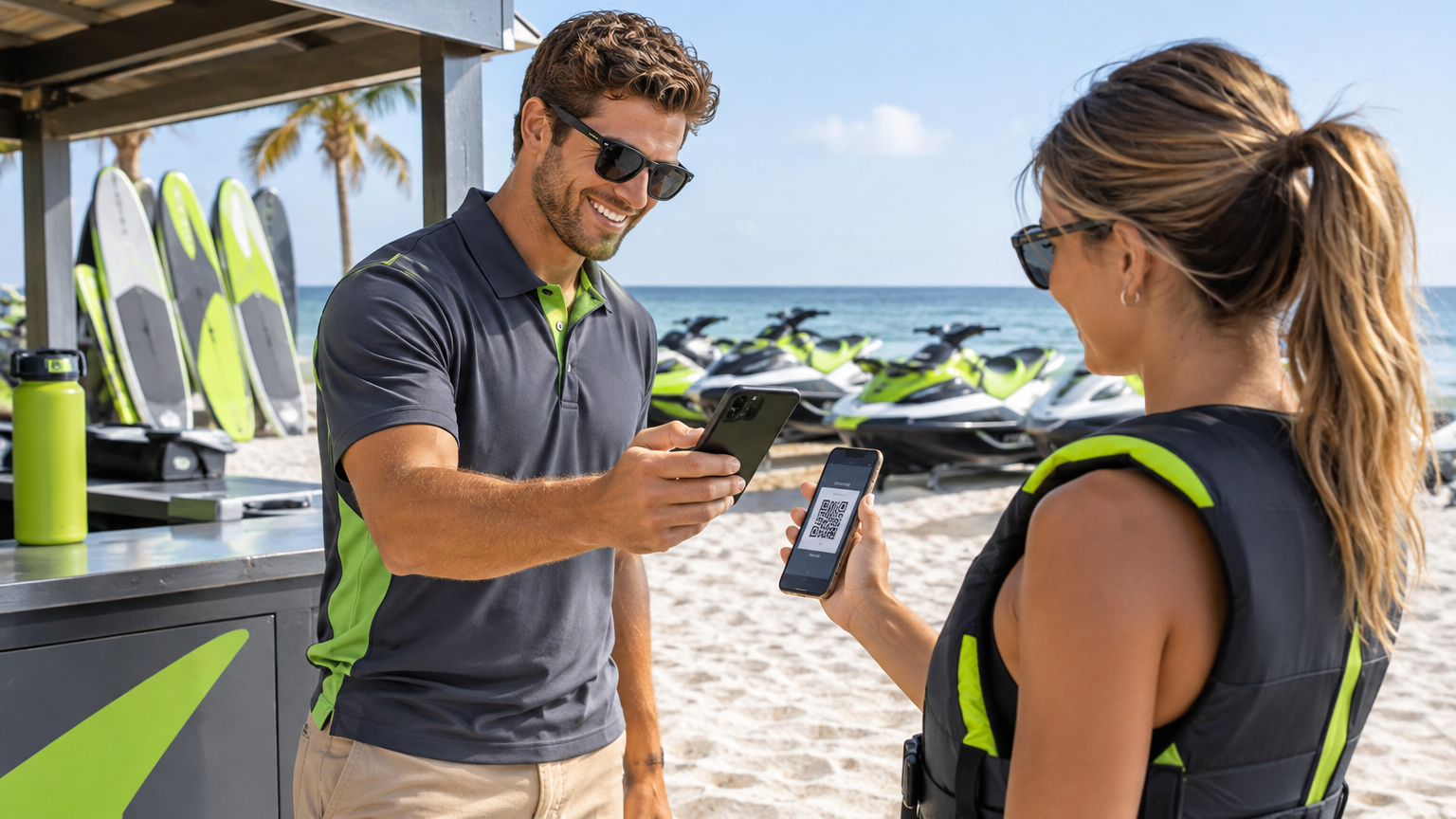
Once waivers are out of the equation, the check-in itself becomes fast. Each booking gets a QR code when it is confirmed. The guest shows up with that code on their phone, the operator scans it, and the system confirms the booking, the waiver status, and payment in a single action.
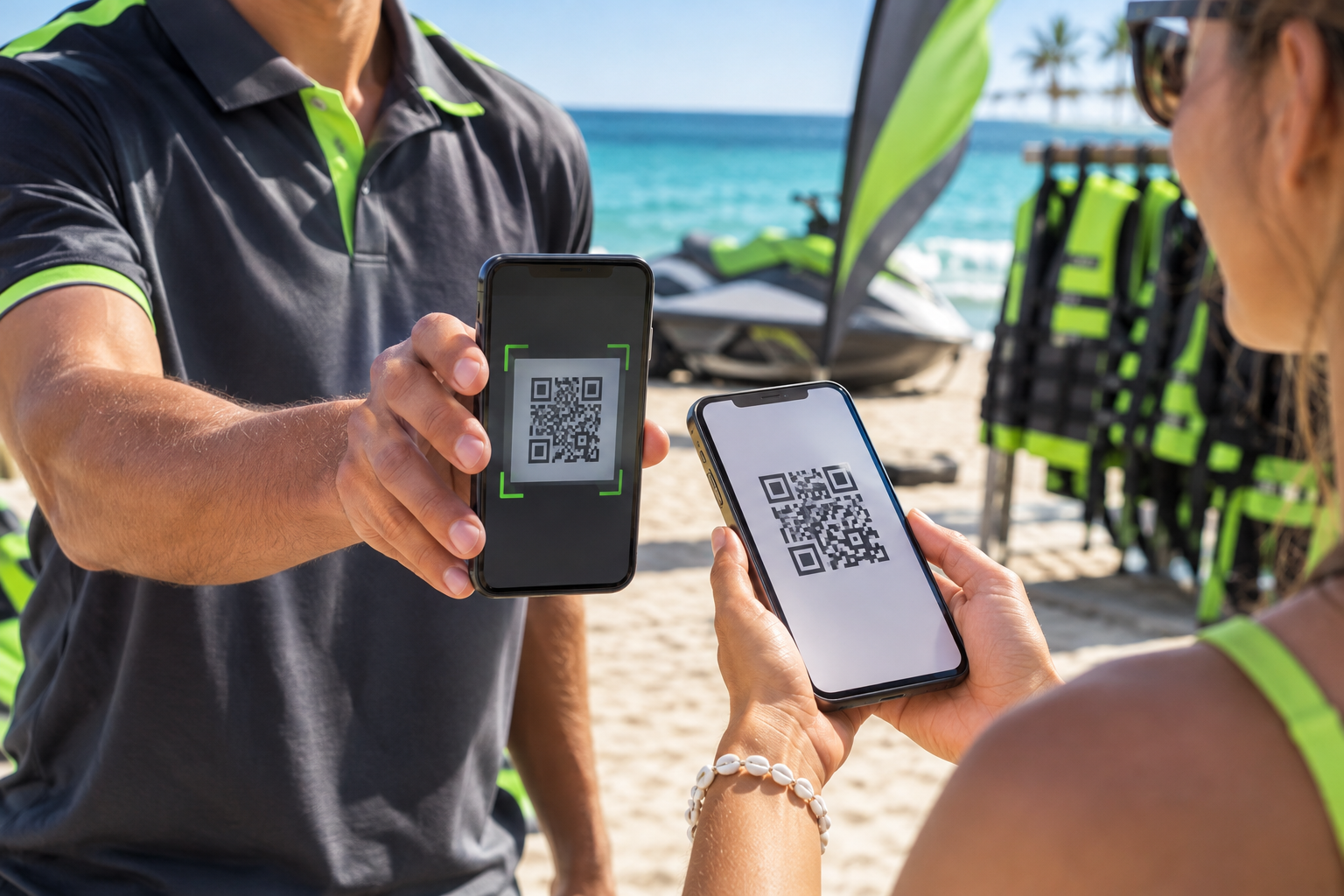
One scan confirms the booking, waiver, and payment before anyone touches equipment.
No clipboard check. No searching a spreadsheet for the name. No asking whether they paid a deposit or paid in full. The scan answers all three questions at once.
VrixPlay's QR check-in works from the camera on any phone, inside the installed app. That means your beach attendant can check a group in at the water's edge, not at a counter, and the inventory count on the dashboard updates in real time.
Build slots against your actual equipment count
Fast check-in still breaks down if the slot structure does not match what you actually have on the water. The fix is simple but requires being honest about your real constraints during setup.
If you have eight jet skis, your calendar should allow a maximum of eight concurrent reservations, not ten or twelve. VrixPlay ties slot availability directly to inventory count, so the booking page refuses to oversell. When an 11 o'clock slot is full, the next available time shows automatically. Guests self-select into open windows instead of booking into a slot you cannot staff.
This matters most for half-hour and hour-long rental windows that roll over frequently. The handoff between a returning group and the next group waiting at the dock is where manual operations break. When the system tracks active slots in real time, the handoff becomes a scan instead of a conversation.
Handle walk-ups without breaking the flow
Not every rental comes from an advance booking. Walk-ups are part of the beach rental business, especially during peak weeks. The key is logging the walk-up into the same system instead of handling it on paper.
Taking a walk-up booking in VrixPlay takes about two minutes: select the slot, enter or look up the customer, collect payment, and issue the QR code. The waiver goes out immediately by text. If the guest signs before they hit the water, great. If they sign at the counter on the spot, that works too and the system still tracks it.
What you avoid is the split record problem: half your rentals in the system, half on a clipboard, and no clean picture of the day at the end of it.
What your end-of-day report should tell you
A morning that runs well should produce a report that is easy to read by 5 PM: how many slots ran, how many were no-shows, what the average rental length was, what add-ons sold, and what total revenue cleared by slot type. If you are still assembling that from memory and a cash drawer count, the data is already gone.
VrixPlay tracks slot-level revenue, utilization, and add-on attachment, so you can see whether the paddleboard instruction add-on is worth the dock space it uses, or whether the 8 AM slots consistently underperform and are better blocked for equipment prep.
Operational decisions like those compound quickly over a season. The operators who make them from real data almost always make better ones than the operators who go by feel.
A workflow that scales to your team
Once you have waivers moving to pre-arrival, QR codes handling the scan at the dock, and slots capped at real inventory, the check-in process becomes something a single team member can run on a busy morning. That is not a small thing. It means you are not dependent on your best employee being at the counter for every shift.
Role-based access in VrixPlay means your beach staff sees the check-in queue and the scanner, not the financial reports or the backend settings. They have exactly what they need to run the dock without access to everything else.
Running a tighter operation this season
None of this requires a wholesale change to how you run the stand. It is a workflow shift: collect the waiver and payment at booking, confirm it with a scan at the dock, cap slots at real inventory, and log every rental in one place.
The result is a counter that is not the bottleneck, a dock that moves faster, and a report at the end of the day that actually tells you how the morning went.
If you want to see how the check-in flow works in practice, VrixPlay is free to set up and runs live on beaches along the Gulf Coast right now. The team in Destin will build the whole thing for you, slots, waivers, and inventory, and have you scanning your first group the same day.