How to Build a Coast Guard-Ready Passenger Manifest
A Coast Guard-ready passenger manifest requires specific information collected before departure. Here is exactly what belongs on a charter boat manifest and how to collect it efficiently.
Charter Operations, Compliance, Passenger Safety
How to Build a Coast Guard-Ready Passenger Manifest
A charter boat passenger manifest should contain the full legal name, date of birth, and contact details or emergency contact for every person on board, along with the trip, vessel, and captain details. At a minimum, you need the departure date and time, vessel name and documentation number, captain name and license number, and the total number of passengers. You should also record any special needs or medical conditions that would matter in an emergency. When the Coast Guard steps on your dock or pulls alongside, they want a clear, current list that matches who is actually on the boat. Your manifest is proof that you know exactly who you are responsible for on every charter trip you run.
Why the Passenger Manifest Is a Regulatory Requirement
The Coast Guard expects passenger vessels to know exactly who is on board for each trip. Your fishing charter manifest or sightseeing manifest is part of that safety picture. When there is an incident, the manifest becomes a search and rescue tool and an accountability record. It helps confirm that all passengers are accounted for and that no one is left behind on the dock or in the water.
During safety inspections, boarding officers often ask to see your passenger list. If your manifest is incomplete or out of date, it can raise questions about your overall charter compliance. As the captain or fleet owner, you are responsible for staying within your inspected or uninspected passenger limits and for keeping accurate records. A clear, current passenger list charter document protects you, your crew, and your business when regulators or investigators start asking hard questions.
What Belongs on a Charter Passenger Manifest
A Coast Guard-ready charter boat passenger manifest is simple, but it must be complete. Each field has a purpose in an emergency or an inspection. At the fleet level, using the same structure across all boats makes it easier for managers and captains to stay aligned. At a minimum, your manifest should include the following items for each trip.
Full legal name of each passenger: Use the name that matches their ID, not a nickname. This helps in medical situations, law enforcement checks, and family notification if something goes wrong. It also avoids confusion when you have repeat last names or multi-boat groups on the dock at the same time.
Date of birth: Age can matter for life jacket rules, medical treatment, and evacuation priorities. Having dates of birth on your fishing charter manifest also helps confirm identity if a passenger is unconscious or unable to speak for themselves.
Home address or emergency contact: You need a way to reach someone off the boat if there is an accident or delay. Some operators record a full home address. Others prefer a specific emergency contact name and phone. Either way, capture enough detail so authorities can reach family quickly if needed.
Phone number: A mobile number lets you reach late passengers, confirm directions, or coordinate if someone gets separated from the group. It also helps during minor incidents, such as an early return or weather delay, when you want to update guests or their families.
Departure date and time: This ties the manifest to a specific trip and helps prove when the vessel left the dock. If investigators look back at a particular day or tide, they can match the manifest to the logbook and booking records without guesswork or memory gaps.
Vessel name and documentation number: For fleets with several boats, this is critical. It shows which hull those passengers rode on that day. The Coast Guard manifest should clearly match a specific vessel, not just your company name or brand.
Captain name and license number: Record the captain of record for that trip and their credential number. This supports your internal oversight, shows who had command, and helps demonstrate that you assign licensed operators to the right vessels and passenger loads.
Number of passengers (must not exceed capacity): Your manifest should show a clear total head count and should never exceed the vessel’s approved capacity. This is one of the first things boarding officers look at when they compare your passenger list charter record to the boat’s paperwork and physical head count.
Any special needs or medical conditions: Note issues that matter for safety, such as severe allergies, mobility limits, heart conditions, or pregnancy. You do not need full medical histories. You just need enough to brief crew and first responders so they can act fast and correctly if something happens offshore.
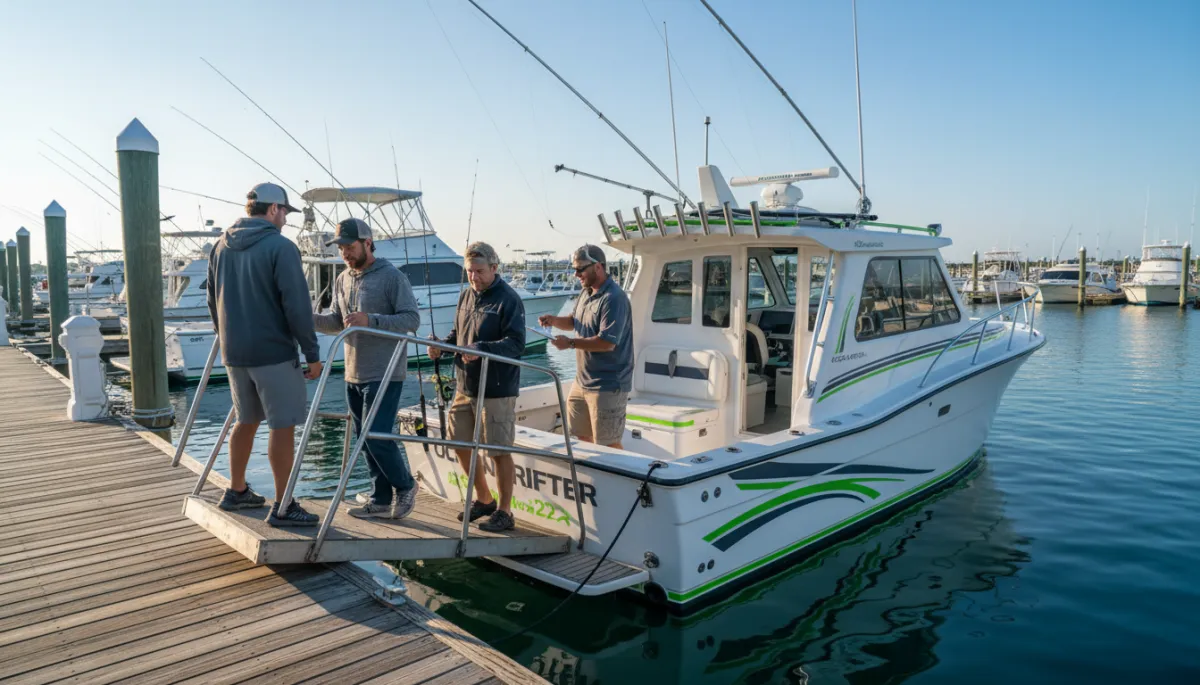
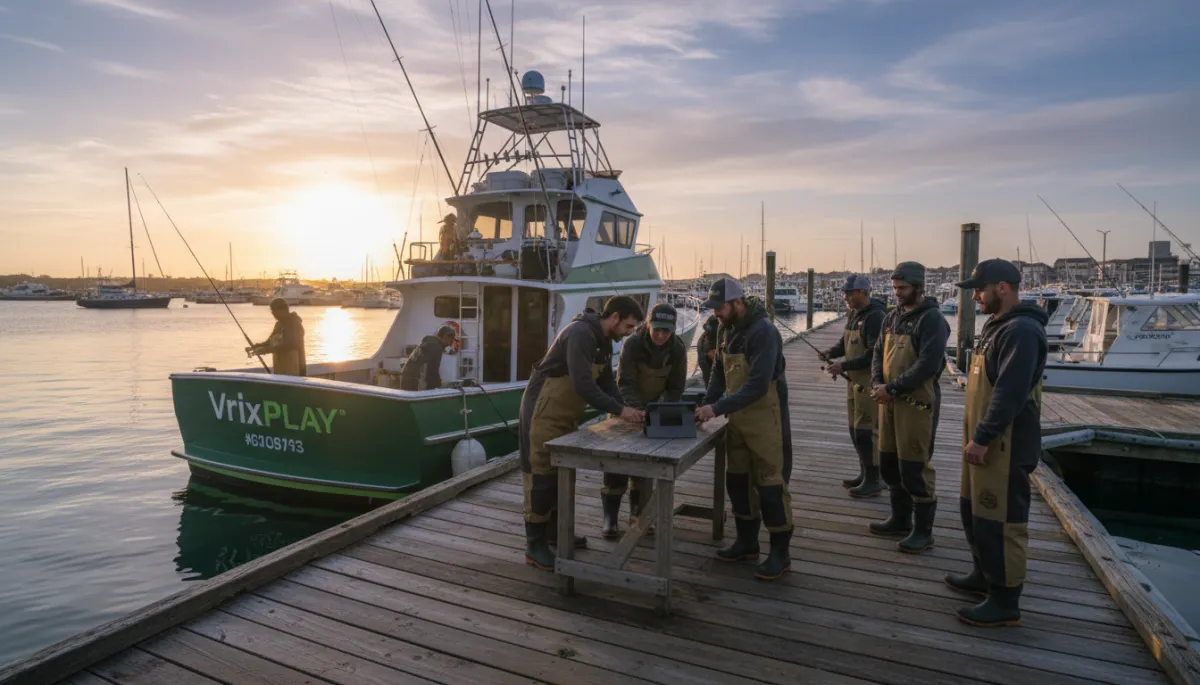
Boarding checks against a clear manifest prevent missed guests and overbooking issues.
How to Collect Manifest Data Before the Trip
The easiest way to keep a clean manifest is to collect the right data at the time of booking. If you wait until you are loading coolers and bait, you will miss details and slow down boarding. Ask for full legal names, dates of birth, phone numbers, and emergency contact information when the trip is reserved, whether it is online or over the phone. For private groups, make the trip organizer responsible for entering each guest’s details, not just a head count.
Before departure, use your booking system to auto-populate the manifest from guest records instead of rewriting names by hand. On the morning of the trip, the captain or mate should review the list, confirm walk-ons or last-minute substitutions, and make any corrections. Once boarding is complete and the lines are off, close the manifest at the final head count and keep it accessible in case the Coast Guard requests it underway or at the dock.
How VrixPlay Populates Manifests From Booking Data
VrixPlay is a free platform that collects passenger information at checkout and uses it to build your charter boat passenger manifest automatically. When guests book, they enter names, contact details, and other required data once. That information flows straight into a manifest view tied to each trip, so your captains and dock staff are not copying names from emails or paper notes at the last minute.
At the dock, captains can pull up the manifest on a smartphone and confirm each passenger as they step aboard. Fleet managers can see manifests for every boat and departure in a single place, which helps with charter compliance and staffing decisions. VrixPlay charges no monthly fee and uses a flat 3% per booking model. You can keep your existing workflows, tighten up record keeping, and keep a clear passenger list charter record on every trip. Explore charter fishing features to see how it works in practice.
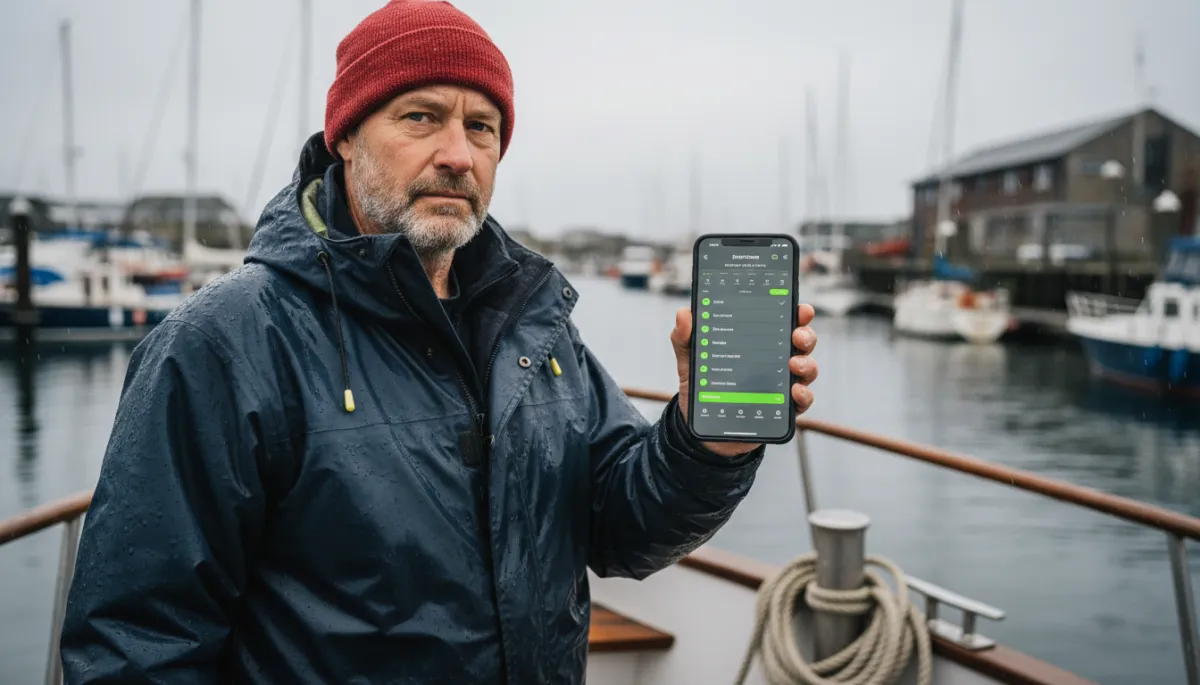
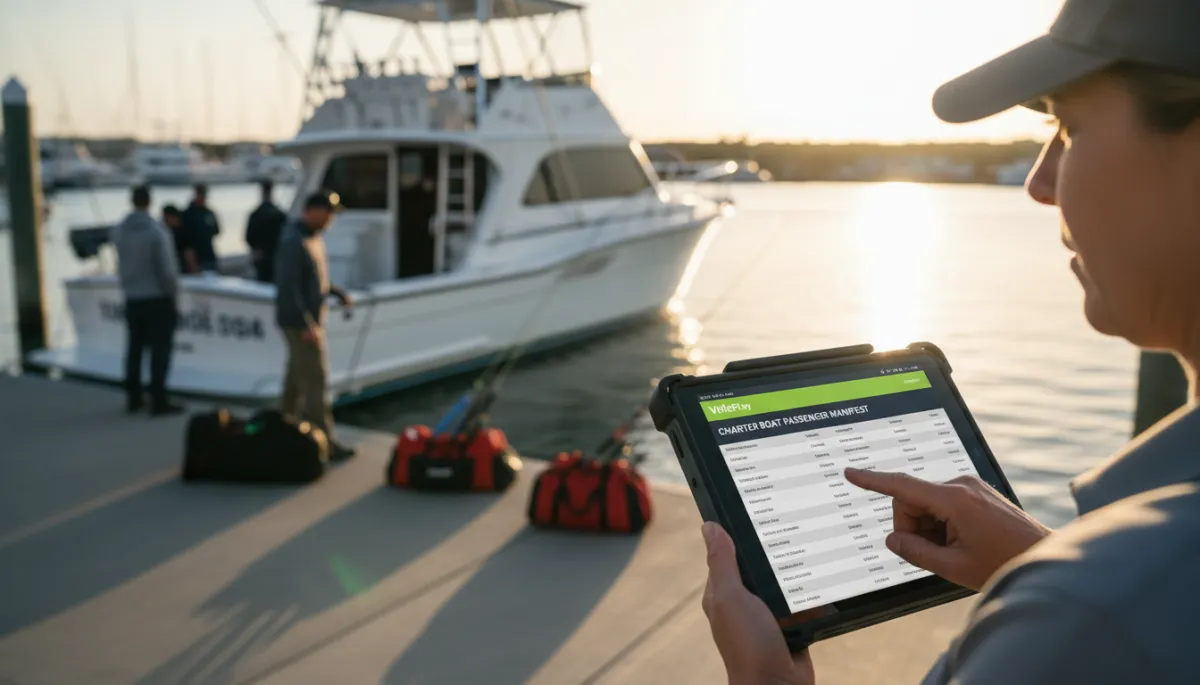
Digital manifests help captains confirm passengers quickly without extra paperwork at the dock.
FAQ: Charter Boat Passenger Manifests
What information should a charter passenger manifest contain?
Your manifest should list each passenger’s full legal name, date of birth, and contact or emergency contact details, along with the trip, vessel, and captain information. It should also show the total number of passengers and note any special needs or key medical conditions. The goal is to give the captain and responders a clear picture of who is on board and how to reach family if needed.
Is a passenger manifest required by law for fishing charters?
Federal rules for passenger vessels focus on safety, capacity, and documentation. In practice, the Coast Guard expects operators to know exactly who is on board. Many local authorities and marinas also expect a written or digital list. A complete fishing charter manifest is a practical way to meet those expectations and to show that you take passenger safety and charter compliance seriously.
How do I keep my manifest up to date on the morning of a trip?
Start with data collected at booking, then review it before boarding. At the dock, have a captain or crew member check off each passenger as they arrive and update the list for no-shows, walk-ons, or substitutions. Once the final head count is done and the lines are off, close the manifest and keep it available in print or digital form for the entire trip.
Can a digital manifest satisfy Coast Guard requirements?
Many operators use digital manifests as their primary record, as long as the list is accurate and can be shown quickly during an inspection. A digital Coast Guard manifest is useful because it can pull from booking data and update in real time. Some captains also print a copy before departure as a backup. The key is that the information is complete, current, and easy to access.
CMake Manifests Part of Every Trip
A clean, consistent passenger manifest protects your passengers, your captains, and your business every time a boat leaves the dock. When your manifest flows from your booking data, it becomes one less task to chase on busy mornings. If you run a fishing fleet or multi-boat operation and want simpler manifests built from the trips you already book, Explore charter fishing features in VrixPlay and see how a flat 3% per booking can support safer, more organized departures.