How to Run a Peak-Season Watersports Rental Stand Without the Chaos
Jet skis, kayaks, paddleboards, and a full beach - peak season hits fast. Here is how to manage time slots, waivers, and check-in without the clipboard scramble.

Peak season at a beach watersports stand does not fail slowly. It fails all at once -- usually around 10:45am on a Saturday when four groups are waiting, two waivers are missing, somebody booked the same jet ski twice, and your best staff member is hunting for a clipboard.
The gear is not the problem. You have the jet skis, the kayaks, the paddleboards. What breaks down is the process around them: how slots get sold, how waivers get collected, how people get checked in, and how the whole picture comes together when the beach is at capacity and there is no time to figure anything out on the fly.
This is a rundown of how experienced watersports rental operators keep things moving when it counts -- and what a tighter operation actually looks like in practice.
The Real Problem Is Not Running Out of Gear
Most rental operators know what their busy hours look like. They know the 10am and 2pm slots fill first. They know holiday weekends push capacity. What catches people off guard is not demand -- it is the gap between what is booked on paper and what can actually happen at the launch.
That gap shows up in a few specific ways:
- Walk-ups and online reservations both think the 11 o'clock slot is theirs
- Waivers are still being signed at the counter while the previous group is still out on the water
- Staff do not know who is who until they ask, and then someone is annoyed
- Cash was taken at the stand with no record attached to any booking
- The day ends and nobody is sure what actually sold or what it made
None of those are equipment problems. They are process problems, and they all get worse as volume goes up.
Sell Slots Against Real Inventory, Not Assumptions
The foundation of a smooth rental day is a booking system that knows what you actually have. If you run six jet skis and each slot is 90 minutes, the calendar should refuse to put a seventh party in that window. That is not complicated -- but it has to be set up deliberately, with the right number of units and the right buffers between groups built in.
Half-hour and hourly pricing work differently, so your system needs to handle both without manual intervention. A 30-minute jet ski ride and an all-day kayak rental should not require two separate processes or two separate staff members to manage.
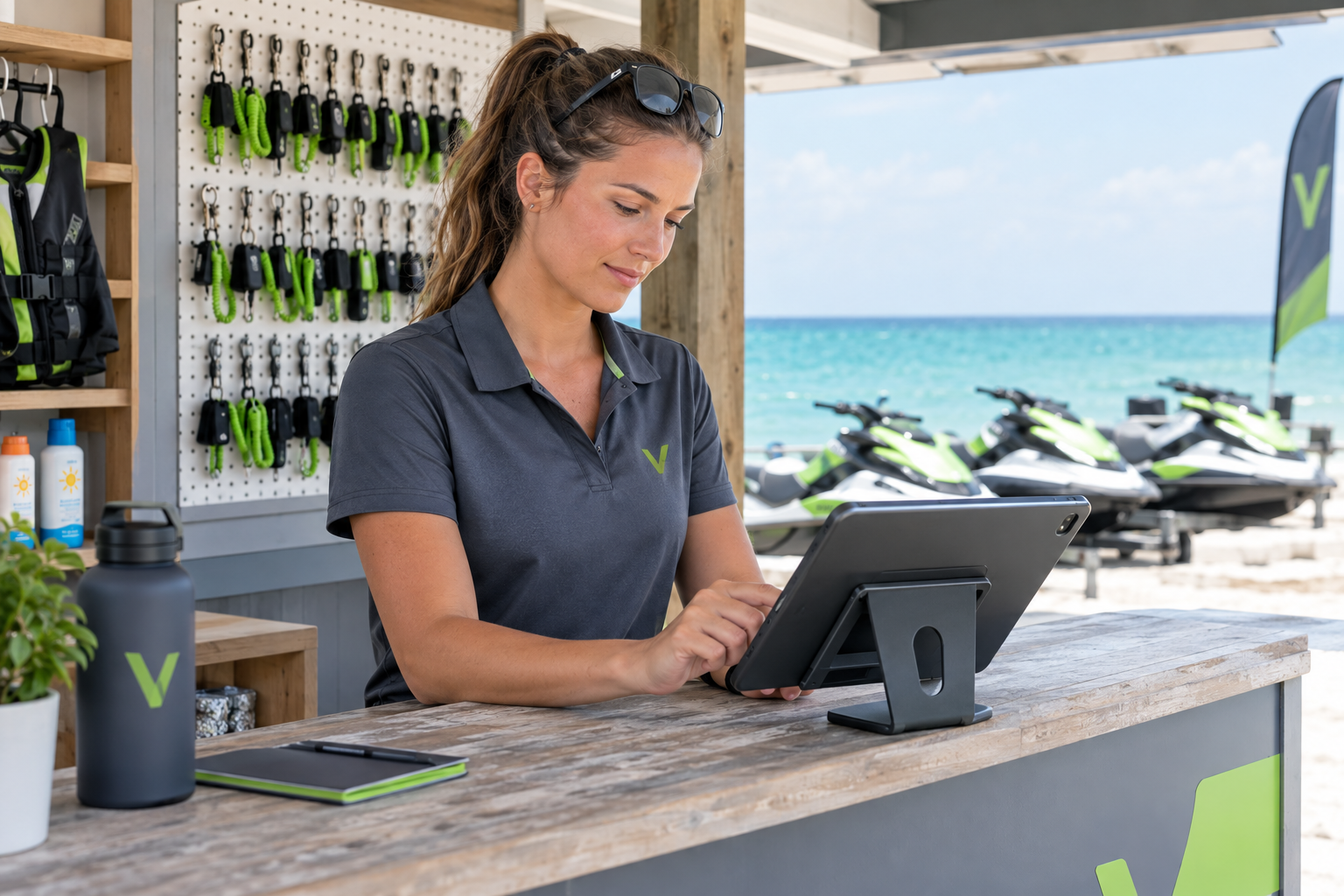
Knowing exactly what is booked -- and what is still available -- before the first group arrives makes the whole day easier to manage.
Blocking a slot for weather or maintenance should take one action, not a chain of phone calls. The same goes for opening up a cancellation so someone else can rebook. When staff have to track this on a whiteboard or in a group text, things fall through.
Waivers Before Anyone Hits the Water
Signing waivers at the counter is one of the most reliable ways to burn through your peak hour. A family of four shows up for the 11 o'clock slot, they have never seen the form, they have questions about the minor section, and the 11:15 group is now also at the stand.
The fix is straightforward: send the waiver link when the booking is made. Guests sign from their phone before they ever show up -- including parents signing for minors. By the time they walk up to the counter, they are cleared. You can see that status in the booking record before they arrive.
This matters for walk-up guests too. Keep a tablet at the stand and have them sign the same digital form on the spot. That way everything lives in one system instead of splitting between paper for some guests and digital for others. If there is ever an incident, you want a clean, organized record -- not a stack of mixed forms from two different workflows.
QR Check-In: From Line to Launch in Under Two Minutes
When a booking is confirmed, the guest gets a QR code. When they show up, you scan it from your phone. That is the whole check-in process.
What you see on the scan: their name, the slot they booked, waiver status, payment status, and any add-ons. No cross-referencing a list. No asking for a last name in front of a line of people waiting behind them. You know immediately who is cleared to get in the water and who still needs something handled.
At a busy beach stand, this matters more than it sounds. The difference between scanning six QR codes and manually looking up six bookings is the difference between a 90-second check-in and a five-minute one. Multiply that by every group on a Saturday and you are looking at a meaningfully different morning.
The scanner works from your phone camera -- no extra hardware, no scanner gun to charge, nothing to lose at the stand.
Sell Add-Ons During Checkout, Not at the Counter
Life vests, wetsuits, guided tours, tow packages, instruction sessions -- these are real revenue, and they are easiest to sell when someone is already in a buying mindset. That is during the booking checkout, not when they are standing at the counter with gear in front of them and a line behind them.
When add-ons are built into the booking flow, guests can browse, compare, and add them before they arrive. The staff member at the stand does not have to pitch anything. The upsell already happened, and it is attached to the reservation record so everyone knows what is included.
This also keeps the counter moving. A guest who already paid for the wetsuit and the safety briefing does not need to be upsold when they arrive. They just need to be checked in and geared up.
Staff Scheduling That Does Not Fall Apart at 9am
Assigning staff by slot rather than by shift gives you a cleaner picture of who is responsible for what. If the 10am jet ski group has a designated guide and the 10am kayak group has another, there is no ambiguity when both groups show up at the same time. Everyone knows their assignment before the morning starts.
This is especially important during peak months when you might be running multiple launch points, multiple product types, and a mix of full-time staff and seasonal help. Scheduling by text the night before does not scale. A system that assigns staff to specific slots and shows them their schedule on their phone does.
Weather Closures Without the Scramble
Weather calls are part of the business. The difference between an operator who handles them well and one who spends two hours on the phone is usually a matter of tooling.
When you need to close a slot or block a full day, the right system lets you do it in one action and notifies every guest booked into those slots automatically. No manual outreach, no individual sorry-for-the-inconvenience texts. Guests get the message, and the slot can open up for future booking or stay blocked depending on what you need.
If you run several beach locations or hotel launch points, that closure should be one decision applied across all of them -- not five separate updates logged in five separate places.
Know What the Day Actually Made
When the last group is out of the water and the gear is racked, the day is not over until you know what it made. Slot-by-slot revenue, utilization rate, add-on attach rate, cash payments logged -- this is the picture that tells you whether the Friday pricing is right, whether the 2pm slot needs to be expanded in August, and whether the wetsuit add-on is worth keeping in the checkout.
None of that analysis is possible if bookings, cash payments, and add-ons live in different places. When everything runs through one system, the end-of-day report is just a report -- not a reconstruction project.
What This Looks Like in Practice
An operation running this way has a noticeably different feel by mid-morning. Guests arrive with waivers already done and QR codes on their phones. Staff scan and launch without a long conversation at the counter. The schedule holds because it was built against real inventory. Add-on revenue shows up in the totals without anyone having to pitch anything at the stand.
That is not a frictionless day -- weather happens, gear breaks, guests are late. But the baseline process is not the source of the chaos anymore. The team is handling the actual work of running a rental stand, not fighting the systems that are supposed to support them.
VrixPlay is built for exactly this kind of operation. It is free software with a 3% per booking fee -- no monthly subscription, no setup costs -- and a US-based team in Destin, Florida that handles the migration and configuration so you are not spending a week learning new software. If your beach stand is heading into the next season still running on a whiteboard and a clipboard binder, it is worth taking a look at how the whole thing can run differently.