How to Speed Up Beach Check-In for Your Watersports Rental Operation
Slow beach check-in costs you rentals. Here is how watersports operators can tighten the arrival process and get more equipment in the water every day.

It is 10:15 on a Saturday morning in July. You have six jet skis ready, a rack of paddleboards staged in the shallows, and a line of twelve people at your stand. All of them are booked, all of them are eager, and several are already asking if they can just hop on. Your first departures were supposed to leave at 10:00.
The bottleneck is not demand. It is paperwork, manual ID checks, and a payment situation that someone left unresolved when they booked. This is the hidden cost of a slow beach check-in: not just frustrated guests, but equipment sitting idle while your capacity drains.
Watersports rental operations live and die by turnover speed. The faster you can move a family from arrival to water, the more rentals you run in a day without adding staff or equipment. This post walks through the specific friction points that slow down beach check-in and what a tighter process looks like in practice.
Why Beach Check-In Is Different From a Marina or Dock
Fishing charters and yacht operators can afford a bit of a check-in ceremony. The boat is there, the captain is there, and the guests have been anticipating a full-day experience. A five-minute check-in is not going to ruin the vibe.
Watersports rentals are different. Your customers are on vacation. They are already in their swimsuits. They are standing in the sun, kids tugging at their arms, and they have mentally committed to being on a jet ski in the next two minutes. Every extra step you add between arrival and launch is friction you are injecting into what should be a fast, fun handoff.
That friction compounds over a busy morning. If each check-in takes four minutes instead of ninety seconds, and you are running thirty rentals before noon, you have burned an hour of capacity and possibly pushed your first-hour customers out late, which ripples into your second-hour slot and so on down the day.
The Four Friction Points That Slow Check-In Down
Most beach rental check-ins stall at the same four spots. Fixing any one of them helps. Fixing all four changes how the whole operation feels.
1. Waivers collected at the stand
Handing a clipboard to a guest at the counter and waiting while they read and sign a liability waiver is the single biggest time sink at most rental operations. Some guests read every line. Some have questions. Some are signing for three kids, which means the form gets passed around. Meanwhile, the line behind them grows.
The fix is to move waiver collection before arrival. Send a waiver link in the booking confirmation. Remind guests in a pre-arrival text the morning of their rental. By the time they walk up to your stand, the waiver is already in the system, signed and stored against their booking. Your staff can confirm it with a glance instead of handing over a clipboard.
2. Payments and balances left open at the counter
If a guest paid a deposit when they booked but owes a balance, that moment should not happen at your beach stand with a card reader in one hand and a radio in the other. Collecting balances at the counter creates delays, card-declined situations, and cash-handling complications that are genuinely hard to manage at the water edge.
Sending a payment link before the rental, with the remaining balance clearly displayed, lets guests pay from their phone before they even arrive. They show up paid in full, you hand them the equipment, and the transaction is closed. No waiting, no awkward conversations about card declines in front of the rest of their group.
3. Manual confirmation lookups
If your staff has to search a spreadsheet, dig through texts, or scroll a Facebook Messenger thread to find a guest booking, that takes time you do not have on a busy morning. Multiply this by every walk-up and every confirmation question you get, and you have burned real capacity on lookup instead of service.
A centralized booking system with a searchable customer list solves this cleanly. Staff enter a name or pull up the booking on the same screen where they confirm the waiver, see the payment status, and log the check-in. Everything in one place instead of three.
4. No QR check-in flow
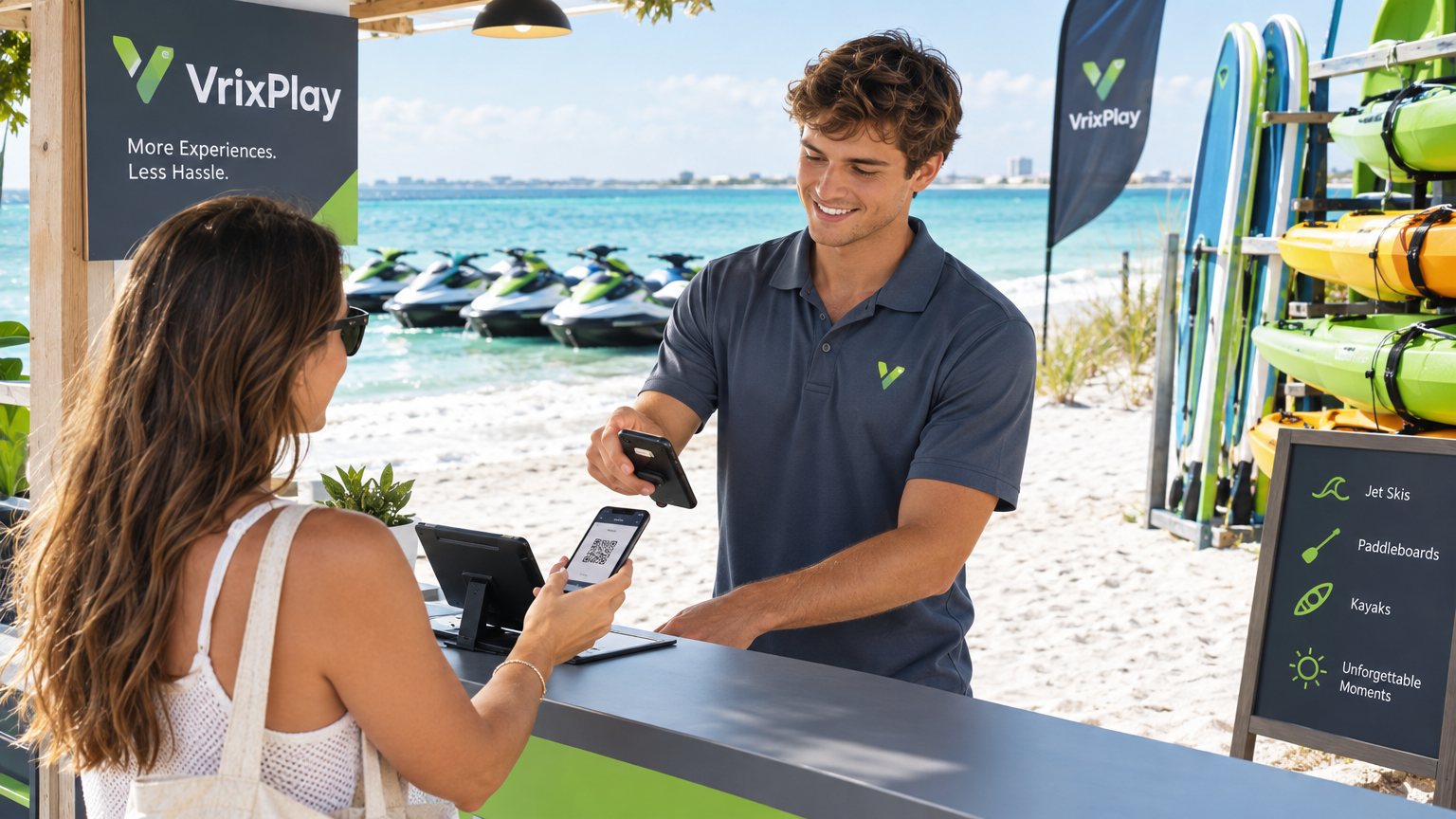
The fastest beach check-ins work like this: guest walks up, pulls out their phone, shows the QR code from their confirmation. Staff scan it, see the booking, waiver status, and payment status in one screen, hand over the equipment, and that guest is in the water. The whole exchange takes under a minute.
QR check-in is not a complicated feature to set up. It just requires a system that sends a QR code at booking confirmation and a staff device that can scan it. The return on that small setup is enormous over the course of a full beach season.
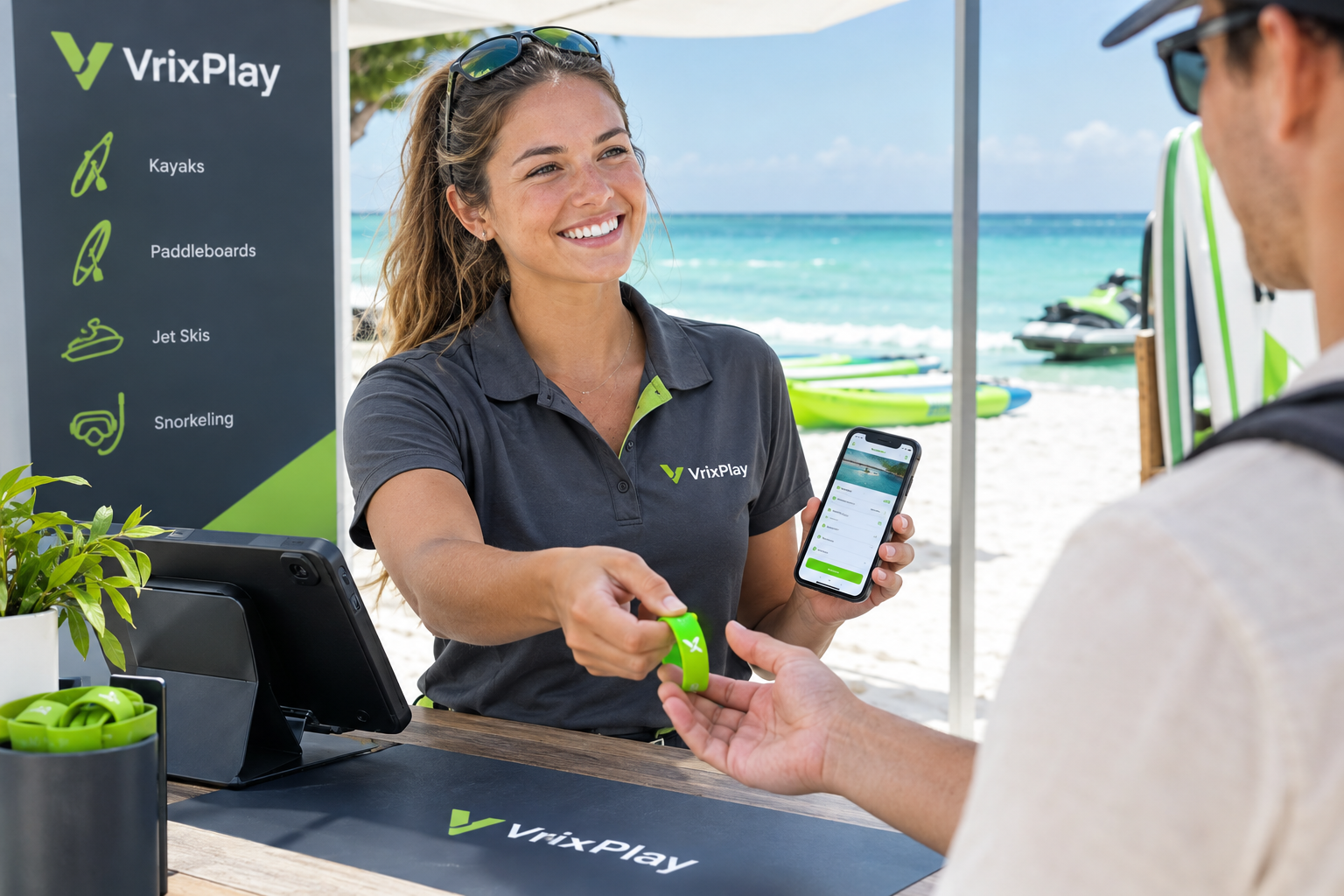
A fast check-in means equipment in the water sooner and happier guests from the moment they arrive.
What a Tight Watersports Check-In Process Looks Like
Here is what the full flow looks like when each of the friction points above has been addressed.
At booking: Guest books online, picks a time slot, pays a deposit, and receives a confirmation with their QR code and a waiver link. They complete the waiver that evening from the couch.
The morning before: An automated reminder goes out with the meeting spot, what to bring, and a payment link if any balance is still open. Most guests arrive fully paid and waiver-complete before they ever touch your stand.
At arrival: Guest walks up and shows the QR code. Staff scan it and see a green confirmation: waiver signed, payment collected, slot confirmed. The staff member runs a quick safety brief, hands over the keys or paddle, and the guest is on the water. Total interaction: sixty to ninety seconds.
During the rental: The booking record is live. Staff can see active rentals, return times, and any notes tied to the guest. If a slot runs long or equipment comes back early, the schedule updates in one place.
This is not a theoretical workflow. It is what happens when the administrative steps are moved to before the day begins, so the beach stand itself is just a handoff and not a transaction window.
How This Affects Your Revenue, Not Just Your Operations
Faster check-in is not just a quality-of-life improvement for your team. It has a direct line to revenue.
If you currently run five to six equipment units with a 90-minute slot structure, the difference between a 2-minute check-in and a 6-minute check-in is roughly one additional slot cycle per day during peak hours. In July on the Gulf Coast, that is real money sitting in a process gap rather than in your Stripe account.
There is also a repeat booking angle. Guests who have a smooth, fast, professional check-in experience are more likely to recommend your operation and come back the next day or on a future vacation. The first sixty seconds with a new customer set the tone for everything that follows. If that first minute involves waiting in a line while someone shuffles through papers, it starts the experience in deficit. If it is instant and easy, you are already ahead.
The Staff Side: Less Scramble, Cleaner Handoffs
Tightening check-in does not just help guests. It makes your team job significantly more manageable on a high-volume morning.
When staff do not have to track down waivers, manually verify payment status, or look up bookings across different tools, they can focus on what actually matters: safety briefings, equipment prep, keeping an eye on who is in the water, and handling the unexpected situations that come up in any rental operation. A well-run check-in flow gives your crew a clear, repeatable process that holds up under pressure instead of collapsing when the line gets long.
Role-based access also helps here. Your dock staff do not need access to your pricing settings or payout reports. They need the check-in screen. A system that shows each team member only what they need removes confusion and keeps sensitive business data separate from the operational tools your crew uses every day.
Setting This Up Without Rebuilding Everything
If you are currently running on a clipboard and a Square reader, the idea of switching to a full booking system might feel like a big project. It does not have to be.
The core pieces you need are: online booking with deposit collection, automated confirmations with QR codes, pre-arrival waivers, payment links for balance collection, and a check-in screen your staff can use from a phone. That is a modest feature set, and it installs on your existing devices without new hardware, no app store setup, and no IT project.
VrixPlay handles all of this for watersports rental operations out of the box. The setup takes about fifteen minutes, and the system already knows how to handle time-slot rentals, waiver collection, QR check-in, and per-unit scheduling. If you are running jet skis, paddleboards, kayaks, or PWCs, the booking flow and dashboard are built around that model and not retrofitted from a fishing charter or a hotel front desk system.
Getting started is free. No monthly subscription, no hardware cost, and you keep running your existing channels while the new system fills in the gaps. The 3% per-booking fee only applies to card payments made through the platform.
One Change Worth Making Before the Next Busy Season
You do not have to fix everything at once. If nothing else changes in your operation, moving waivers to before arrival will cut your average check-in time noticeably and immediately. That alone is worth the effort.
From there, adding QR check-in and pre-arrival payment links compounds the improvement. Each piece you put in place before the season peaks means more equipment in the water, smoother mornings for your team, and guests who leave the stand excited instead of relieved that the check-in is finally over.
The beach is not going to slow down for you. Your check-in process should be the last thing that does.
See how VrixPlay handles watersports rental operations, including time-slot scheduling, waivers, QR check-in, and payments built for the beach.