How Tour Boat Operators Can Stop Overselling and Board Faster
Tour boat operators lose time and trust to overselling and slow boarding. Here's how recurring departures, real capacity controls, and QR check-in fix both problems.

The 5:30 sunset cruise is supposed to leave at 5:30. But at 5:22 there are 47 people on the gangway, the manifest is a printed sheet someone spilled coffee on, and you just realized you sold 44 seats on a boat that holds 40. This is not a staffing problem. It is a system problem, and it happens to tour boat operators every peak weekend.
Overselling a departure is easier than it sounds. Walk-ups buy from the dock. Someone sells tickets over the phone. An online booking comes through while a staff member is manually counting heads. None of those channels talk to each other, so no one actually knows the real count until the boat is about to leave. By then it is too late to fix gracefully.
Slow boarding compounds it. Paper tickets get lost. Guests arrive with a screenshot of a confirmation email and no QR code. Your crew ends up cross-referencing names against a list while the first guests are already shifting their feet, waiting to find a good spot before the boat fills up.
Both problems have the same root cause: your booking and your boarding are not connected. Fix that connection and both problems mostly solve themselves.
Why Recurring Departures Need a Different Structure
A private charter booking is simple. One group, one record, one payment contact. You block the vessel and move on. But a public tour departure is structurally different. You are selling the same boat, on the same schedule, to unrelated buyers who may book days or weeks apart across different channels. That means you need a system that tracks remaining capacity in real time, not just records individual transactions.
When a seat sells on your booking page, that seat needs to disappear immediately from the available count everywhere — not update overnight, not sync when someone remembers to check the spreadsheet. Real-time capacity enforcement is what stops overbooking. It is not glamorous, but it is the single thing that separates operators who board clean boats from operators who are turning away guests at the gangway and issuing awkward apologies.
Recurring departures add another layer. If you run a 10am dolphin cruise, a 2pm snorkel trip, and a 5:30 sunset sail every day of the week, rebuilding that schedule manually every Sunday night is a waste of time and a source of errors. The right setup is to build your weekly template once, let it repeat automatically, and only touch it when something actually changes — a holiday weekend, a vessel maintenance window, a private group buyout.
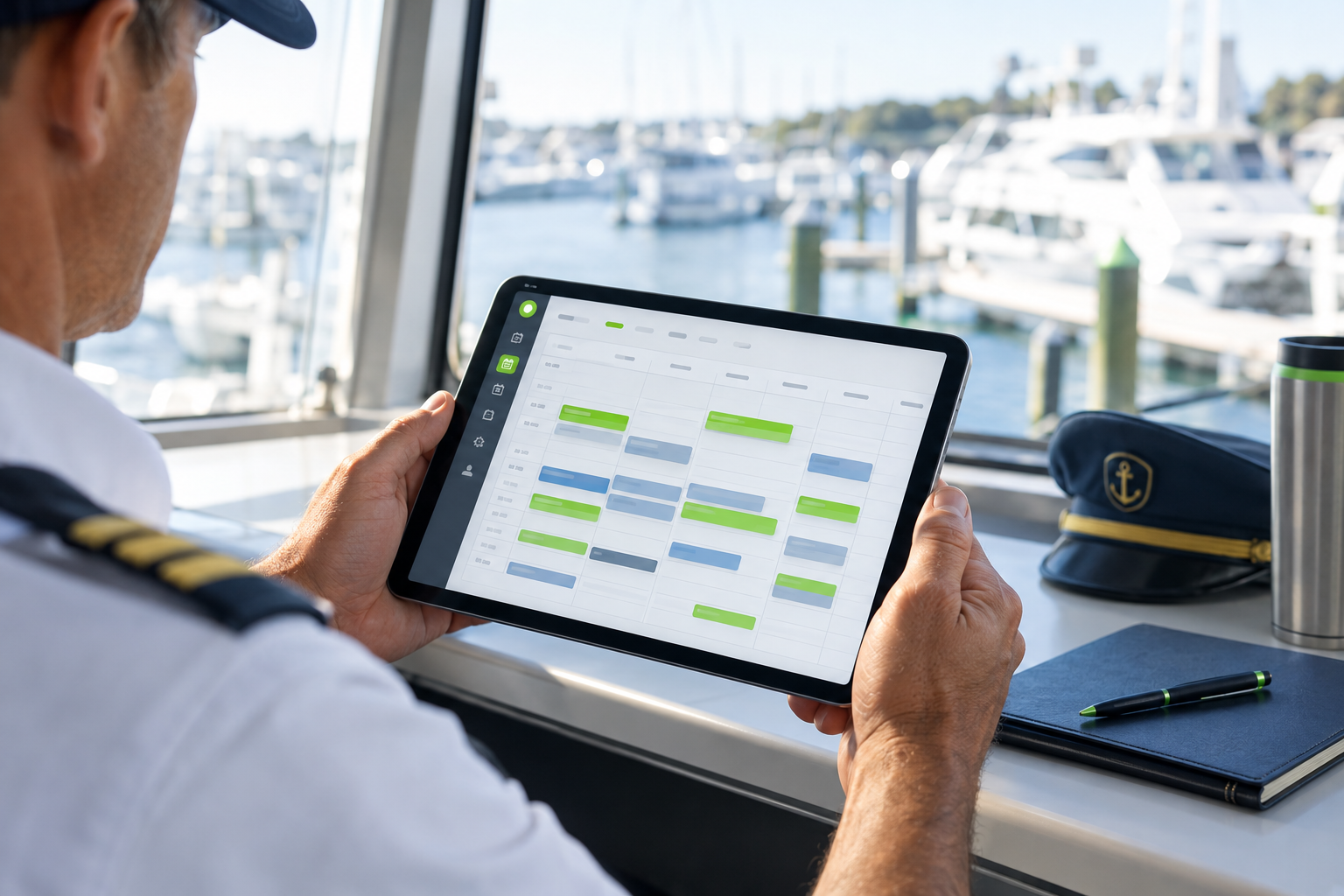
A weekly departure schedule built once runs itself — until you need to change something.
What Breaks When Booking and Boarding Are Separate
Most tour operators start with some combination of an online ticketing tool, a phone line, a walk-up counter, and a printed boarding list. Each channel works in isolation. The problem is they do not share a live seat count, and your crew at the dock has no reliable way to verify who is on each one.
Here is what that looks like in practice:
- A family of four buys online. A couple buys at the dock. Two more call and pay over the phone. All six transactions happened, but only the online one reduced the available count on your booking page. The dock and the phone call were manually noted on a clipboard that is now sitting under the register.
- A guest shows up with a name that does not match the booking because a friend booked for them. The crew spends three minutes sorting it out while the boarding line backs up behind them.
- Someone bought a ticket for the 2pm trip but arrives at 10am. Without a tied QR code, the crew cannot quickly tell whether this is a mix-up or a genuine 10am guest they cannot find on the list.
None of this is unusual. It is just what happens when the booking system ends at the transaction and has nothing to say to the boarding crew.
How QR Boarding Passes Clean Up the Gangway
When a guest books a seat and immediately receives a QR code tied to that specific departure, the boarding process changes completely. The crew does not check names against a list. They scan the code, the app confirms the guest is on that trip and that their seat is valid, and the guest boards. Done in under three seconds.
Duplicate scans matter here. If the same code is scanned twice — which happens when guests screenshot codes and share them, or when someone walks back through the boarding area — the system flags it immediately. The crew knows without having to remember every face who already came through.
The other thing that changes is the manifest. Instead of a printed sheet someone has to update and reprint for every late addition, your departure manifest lives in the app. It shows a live headcount, who has boarded, and who is still expected. When the last scan comes through and the count matches, the captain can give the all-clear and leave on time. That is a genuinely different experience than counting heads by hand and hoping you did not miss someone.
Group and Private Bookings in the Same Flow
One thing that catches tour operators off guard when they switch to per-seat ticketing: group bookings still need to work. A family of eight, a school group of 35, or a company outing that wants to buy out a Friday afternoon departure all need a path that does not force each person to book individually.
The right setup handles these without breaking your capacity logic. A group leader books a block of seats in one transaction. That block reduces available inventory for that departure just like individual seat purchases do. If the group wants the whole boat, that departure closes to new bookings automatically once capacity is reached. If they only want 20 seats on a 45-seat vessel, the other 25 keep selling normally.
Private buyouts are a separate case. When someone wants the whole boat for a private event, that departure should block from public sale entirely and your team handles it outside the per-seat flow. The two booking types should not compete for the same slots on your calendar — your system should know the difference and enforce it.
Weather Cancellations: One Action, Every Guest Notified
Weather calls are where manual systems really fall apart. If you need to cancel a 2pm departure because of incoming afternoon storms, your options with a spreadsheet-and-phone system are: call every guest individually, send individual emails from your inbox, or post something on social media and hope they all see it in time. None of those are good.
When your departures live in a booking system, a weather cancellation becomes one action. You cancel the departure, and every guest booked into it gets notified at the same time — by email, by SMS if you have messaging set up, or both. You can offer a rebook or initiate refunds from the same screen. The whole thing takes a few minutes instead of an hour on the phone.
That matters for trust. Guests who get a prompt, clear cancellation notice and an easy path to reschedule are far more likely to come back than guests who found out the trip was off because they drove to the marina and saw an empty dock.
Seeing What Your Departures Actually Earn
Running tours well is not just about boarding clean — it is about knowing which time slots are worth keeping and which ones consistently underperform. If your 10am Saturday dolphin cruise sells out every week and your Monday 2pm snorkel trip averages four seats, those are different business decisions hiding in your data.
When every departure is tracked in one system, that data surfaces without extra work. Load factor per slot, revenue per departure, add-on attach rates — the numbers that tell you where to focus your marketing, where to adjust pricing, and which times to cut from the schedule during slow seasons. Operators who run this analysis even informally tend to make noticeably better scheduling decisions than those who go on feel alone.
How VrixPlay Handles This for Tour and Cruise Operators
VrixPlay is built specifically for experience businesses that sell time on the water, and the tour boat dashboard reflects that. You build a weekly departure schedule once — your dolphin cruises, sunset sails, snorkel trips, whatever your operation runs — and it repeats automatically. Each departure tracks its own seat inventory in real time so your booking page always shows an accurate count.
When a guest books, they get a QR boarding pass attached to their confirmation. At the dock, your crew scans codes from a phone with no extra hardware. The manifest updates live as guests board, so you always know your true headcount before casting off. If a guest has not signed a waiver yet, that shows on the manifest too — no scrambling through paper forms at the last minute.
Weather calls, private group bookings, multi-vessel operations, add-ons like snorkel gear or guided instruction — VrixPlay handles those in the same system without requiring separate tools for each one. And because it runs on a phone like a native app without an app store download, your dock crew has it in their pocket wherever they are.
The platform is free per month. VrixPlay charges a flat 3% per booking, which keeps costs predictable as your seat volume grows.
If you run public departures and your current setup involves paper lists, separate channels that do not talk to each other, or a boarding process that depends on memory and hope, it is worth seeing how the tour boat dashboard runs. Learn more about VrixPlay for tours and cruises.