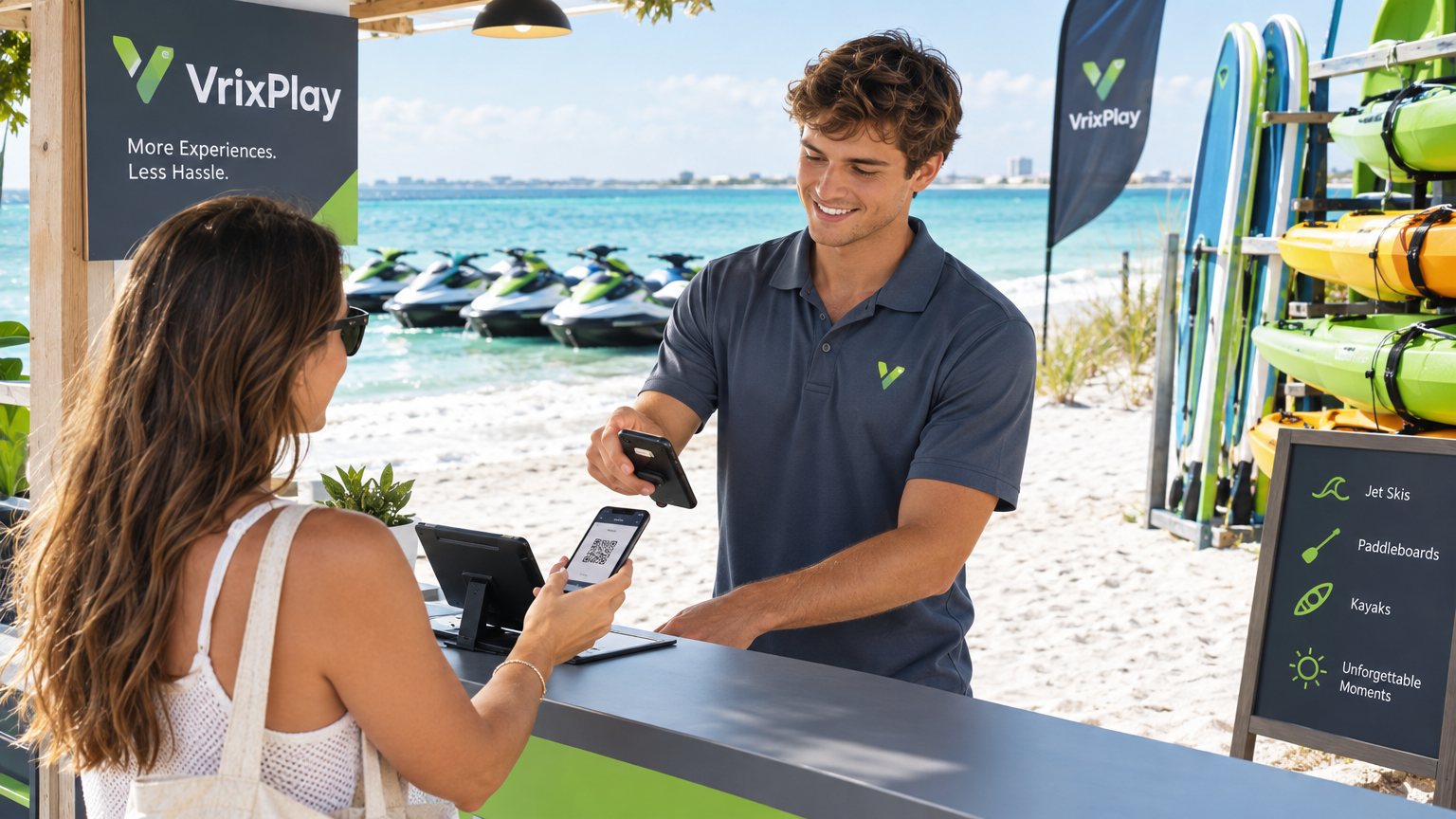
How to Speed Up Beach Check-In for Watersports Rentals
Watersports rental operators lose real revenue at check-in every busy day. Here's how QR codes, pre-signed digital waivers, and time-slot booking cut the line and keep gear moving.
Peak hours at a beach watersports stand move fast — or they should. In reality, most operators spend the first ten minutes of every rental slot chasing paperwork, explaining the waiver, re-confirming names against a paper list, and manually logging who showed up. By the time the first jet ski actually hits the water, half the slot is gone.
This isn't a customer problem. It's a workflow problem. And it's one of the more fixable ones in the business.
Why beach check-in gets slow
Watersports rental check-in has a few specific things working against it. You're often outdoors in direct sun with a line of impatient guests who already paid. The staff member running check-in may also be the one launching gear. And unlike a fishing charter that departs once and you close the manifest, rentals cycle all day — every time slot is another round of the same friction.
The biggest time drains tend to be:
- Paper waivers that guests sign at the stand instead of before they arrive
- No pre-collected guest information, so staff ask for name, phone, and ID on the spot
- Booking references that exist only in a text message or email the guest can't find
- No clear start-time structure, so multiple groups pile up at once
Fix those four things and check-in gets noticeably faster without buying any hardware or hiring extra staff.
Step one: collect everything before they arrive
The most effective check-in improvement happens the night before the rental, not the morning of it. When guests book online, the system already has their name, contact info, booking reference, and time slot. That's the foundation. Everything else — waivers, payment balances, trip details — should be collected digitally before they walk up to the stand.
An online booking flow that captures a deposit at checkout, sends a confirmation with the guest's QR code, and routes them through waiver signing before arrival means your staff starts check-in already knowing who's coming and that they've signed. The only thing left is verifying identity and launching gear.
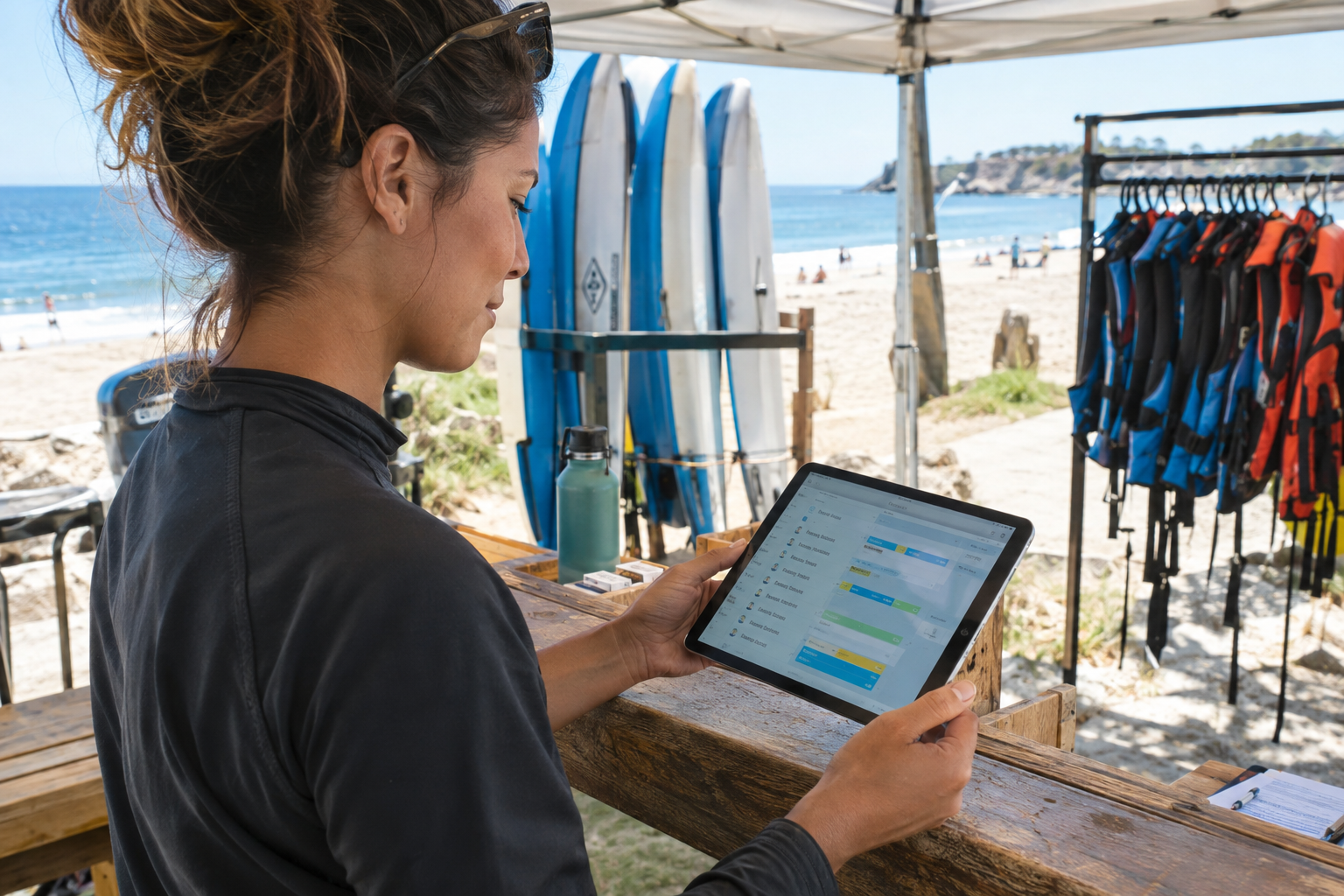
When the schedule is organized before the first group arrives, the whole day runs smoother.
Step two: use digital waivers that follow the booking
Paper waivers at the stand are a liability twice over. They slow down check-in and they tend to disappear. A loose stack of signed waivers at the end of a beach day is not a defensible record.
Digital waivers tied to the booking solve both problems. When a guest signs before they arrive, the signature is stored against their booking record and linked to every future visit from that same contact. A family of four signs once; that signature covers them going forward. For walk-ins, the waiver link can be sent immediately from the booking screen and signed on their own phone in under a minute.
The staff member at check-in can see at a glance which guests still need to sign — no digging through paper, no asking twice.
Step three: QR code check-in at the stand
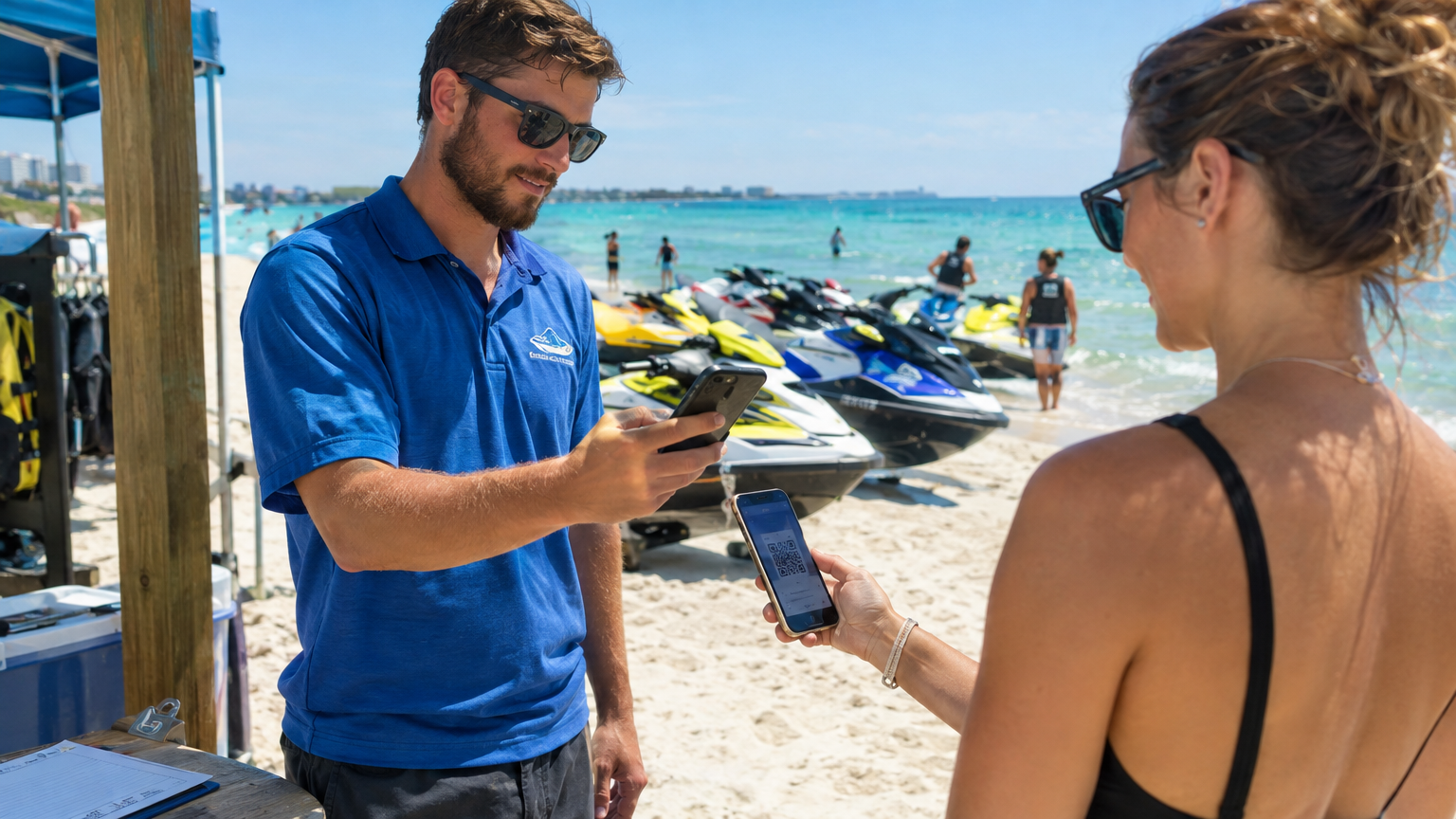
When a guest books online, they receive a confirmation email with a QR code. When they arrive, your staff opens the scanner on their phone and scans it. The booking pulls up, the guest is marked as checked in, and you move on. No typing names, no cross-referencing a clipboard, no reading out confirmation numbers.
This works inside VrixPlay's installed PWA on any iPhone or Android — no dedicated scanner hardware to buy, charge, or worry about losing on the beach. The phone camera handles it, and the app stays synced whether you're online or briefly in a dead spot.
For walk-ups, adding a manual booking takes about 30 seconds from the same screen. The workflow doesn't break just because someone didn't book ahead.
Step four: structure your day with time slots
One of the quieter ways check-in gets chaotic is when multiple groups all show up at the same time. This usually happens when rentals are sold by duration but not assigned to specific departure windows. Everyone who booked a 10 AM hour-long jet ski session shows up at 10:00 and they're all standing in the same line.
Time-slot booking spreads load across the morning. A 9:00 group, a 9:30 group, and a 10:00 group are each a manageable check-in event. Stack them without structure and you have a crowd.
Enforcing lead-time rules — blocking same-hour bookings, for example — also cuts down on guests who book five minutes before their slot and then sprint to the stand half-prepared. A little friction in the booking flow saves real time on the beach.
What this looks like on a real beach day
An operator running a tighter watersports check-in flow might look like this: by 8:45 AM, the day's manifest is already set. Every booked guest has a confirmation QR code. Most have already signed the waiver. The 9:00 group arrives, two of them pull up their QR codes immediately, the third is a walk-in who gets manually added in under a minute. By 9:04, all three are on gear and in the water.
Compare that to the version where staff is still filling out paper waivers, one person can't find their email, and the QR check-in doesn't exist — the 9:00 slot doesn't launch until 9:12 or later. That's 12 minutes of paid rental time gone, multiplied across every slot of the day.
The tools that make it work
None of this requires custom software or a complicated setup. VrixPlay handles watersports rental operations with the same engine that runs Gulf Coast fishing charters and tour boats — time-slot bookings, online deposits, QR check-in from your phone camera, sign-once digital waivers tied to every booking, and a contact database that tracks guests across visits.
The dashboard shows you today's rentals, who's checked in, and what's still awaiting confirmation, all without toggling between spreadsheets, text threads, and a physical log.
It's free to start, with no monthly subscription and a flat 3% per booking. Setup takes about 15 minutes.
A few things worth checking in your current setup
If you're running watersports rentals and check-in is still slower than it should be, here are the specific questions worth asking:
- Are guests signing waivers on paper at the stand, or digitally before they arrive?
- Does every online booking generate a QR code the guest brings to check-in?
- Do your time slots have lead-time rules that prevent last-minute same-hour bookings?
- Can a staff member look up any booking on their phone without needing a printed list?
- Are walk-in bookings logged in the same system as online reservations?
If the answer to most of those is no, there's real time to recover. And in a rental operation where every slot is revenue, that time adds up.
If you want to see how the watersports rental setup works in VrixPlay, take a look at the watersports page or start a free account and walk through the setup in about 15 minutes.